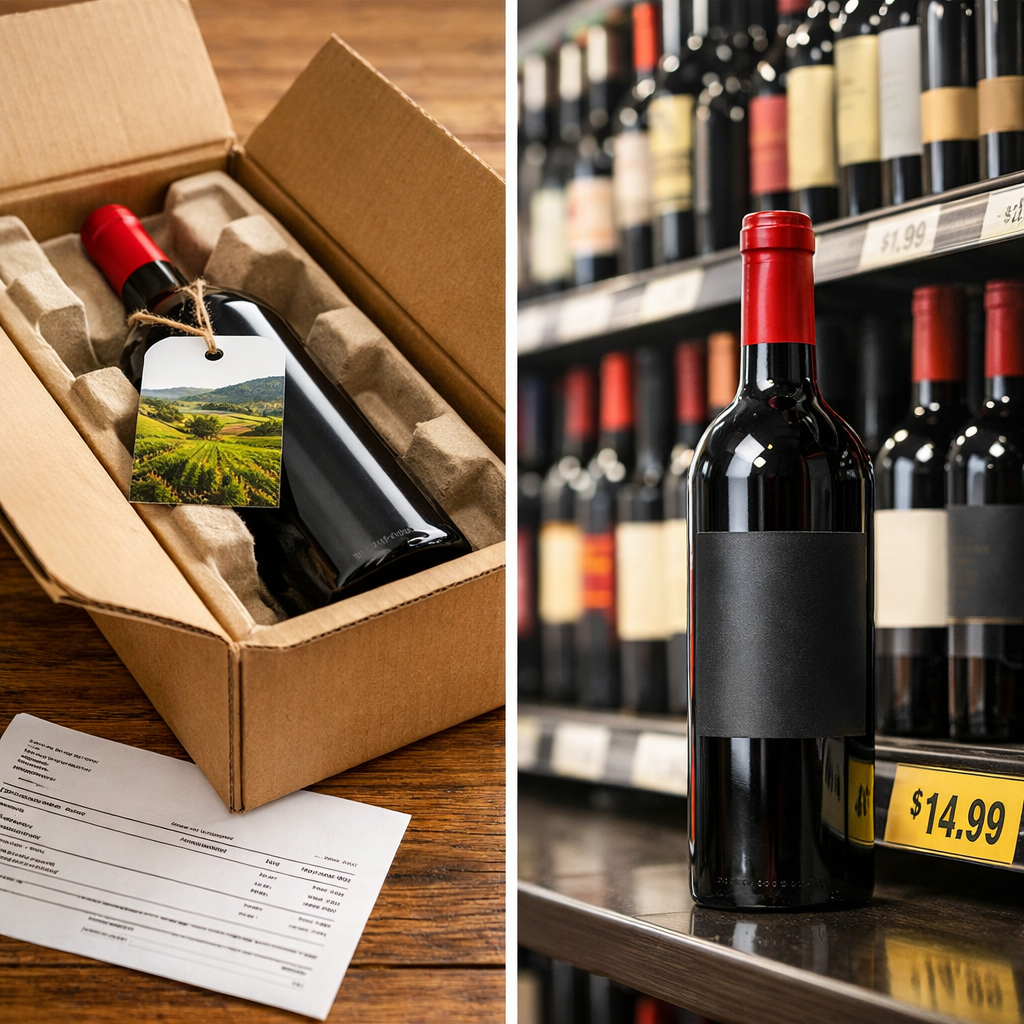
Winery-Direct vs Retail: Get Fresher, Better-Value Bottles Online
Getting the best quality wine direct from a winery can mean earlier access to new vintages, tighter provenance, and special releases you’ll never see on shelves. Retail, on the other hand, wins for competitive pricing on widely distributed bottles and same-day convenience. This My Paired Wine guide breaks down when to buy direct-to-consumer wine (DTC) from a producer and when to buy wine online or in store from retail—so you can match quality, value, and speed to your meal and budget. We’ll also show you how to verify local availability in address-first delivery apps and when to pivot to DTC for exclusives and estate wines.
Quick verdict
Choose winery-direct for exclusivity, provenance, and early access. Choose retail for price competition, breadth, and convenience. Recent data shows DTC shipment value fell about 6% year over year—signaling a premium-leaning channel that isn’t always the cheapest everyday option, per the WineBusiness Analytics March 26 report. My Paired Wine helps you decide in minutes with side-by-side channel guidance.
| Factor | Winery-Direct (DTC) | Retail |
|---|---|---|
| Freshness | Fewer touchpoints and earlier access can improve provenance and reduce handling risks. | Can be just as fresh for fast movers; check vintage dates and storage practices. |
| Price | List prices may hold; clubs add savings but shipping can offset deals. | Frequent promotions and distributor discounts can undercut winery list on non-allocated wines. |
| Selection | Best for allocated, estate, and limited releases with first-access opportunities. | Broad cross-region assortment in one cart; fewer true exclusives. |
| Convenience | Smooth for club members; shipping varies by state and adds time/cost. | Same-day pickup/delivery is common with broad shipping footprints. |
Note: Retailers may be cheaper on non-allocated wines, while DTC secures limited and allocated releases, per buyer comparisons on WineBerserkers threads.
Action cue: Verify local stock via address-first delivery apps, then buy the best-fit bottle our guide recommends.
What winery direct means
“Winery-direct (direct-to-consumer, DTC) means buying from a winery’s tasting room, club, or website, bypassing distributors and retailers; it cuts out brokers/distributors and often offers allocations, limited releases, member discounts, and events, with tighter provenance and earlier access to new vintages, plus tailored service and shipping.” See a plain-language explainer of what winery-direct means for context. In the traditional three-tier system—winery → broker/distributor → retailer—each step adds cost and handling. DTC reduces those touchpoints, which is why it matters for freshness, access, and relationships. In our pairing guides, we call out when DTC status meaningfully affects freshness, access, or value.
Perks people actually use:
- Allocated/cult wines and estate-only releases that rarely hit shelves.
- Wine club benefits around ~20% off list, plus loyalty events and first dibs.
What retail means
Retail wine (in-store or online) is sold by third-party shops that buy through distributors or wholesalers, offering broad availability, price competition, and easier shipping across states. According to 2024 market trends, distributors and retailers increasingly favor faster-turning SKUs, which can limit niche shelf space over time. We lean on retail breadth for fast, great-value weeknight pairings when exclusivity isn’t required.
Why this matters:
- Better odds of deal pricing on non-allocated bottles versus winery list.
- Immediate pickup and taste-before-you-buy opportunities in some stores.
Freshness and provenance
Provenance describes a wine’s documented origin and custody—from vineyard and bottling to storage and shipment. Strong provenance lowers risks like heat damage, oxidation, or counterfeiting and gives buyers confidence the wine reached them as the producer intended, with clear records at every handoff point. Our recommendations note freshness cues—recent vintages and storage questions to ask—when it matters.
Why DTC can feel fresher:
- Earlier access to new vintages and small lots with clear origin details.
- Fewer intermediaries can mean fewer handling risks.
Balanced view: Retail offers breadth but may include older or redistributed stock; check recent vintage dates and ask about storage and turnover on pricier bottles.
Price and value
The tradeoff: Retail may price identical bottles below winery list via promotions or distributor discounts, while producers often hold list price to support retail partners.
Useful data points:
- Buyer reports show some direct offers run 15–20% higher than local retail.
- Cult/allocation wines can be cheaper at the winery than on shelves or auctions because scarcity premiums inflate secondary prices.
- Wine clubs often provide ~20% off list, improving DTC value if you buy regularly.
Quick comparison tips:
- Compare final delivered cost: bottle price + shipping + tax vs retailer price + delivery/tip.
- For cellaring or gifts, value provenance and authenticity over small price differences. My Paired Wine prompts a delivered-cost check so you capture real value, not just list price.
Selection and discovery
Where DTC shines:
- Allocations, estate/small-lot releases, and member events that don’t broadly distribute.
- Not every producer sells the full portfolio online; some wines remain club- or mailing-list–only.
Where retail excels:
- Cross-region discovery in one cart—styles, grapes, and price points side-by-side.
- Expect tighter SKU counts as stores rationalize shelves toward faster movers.
Strategy context: Tasting rooms and clubs represent roughly 53% of an average winery’s sales, and some regions lean on DTC for up to 78%, according to SVB’s wine report—explaining why exclusives and loyalty experiences live direct. We label wines as exclusive (DTC/club) or widely distributed to streamline your choice.
Convenience and shipping limits
Retailers often have broader shipping footprints and immediate pickup options. Wineries face state-by-state DTC shipping limits and added shipping costs that can affect price parity. Market conditions matter too: higher financing costs have squeezed distributor/retailer margins—fueling targeted promos but also cutbacks—and recent DTC shipment value declines indicate a premium-focused, selective buying environment. Use our delivery guidance to quickly confirm what can reach your door today.
A fast 4-step ordering flow:
- Check local delivery apps for in-stock options by your address.
- Price-compare against the winery site (include shipping and taxes).
- If exclusive or allocated, buy DTC; otherwise, choose the best in-stock retail value.
- Save favorites to streamline future weeknight orders.
When to buy winery direct
- You want allocated, small-lot, or estate-only releases; cult wines may cost less at the winery than on the secondary market.
- You value provenance and early access to new vintages.
- You’re joining a wine club (~20% discount) or attending member events.
Note: Buying DTC strengthens producer relationships and margins, which can support long-run quality and experience, according to research on DTC margins and relationships. We flag these cases in our picks so you can pivot with confidence.
When to buy retail
- You need same-day pickup/delivery or want to taste before buying.
- You’re price-shopping non-allocated wines; retailers may undercut winery list.
- You want broad discovery across regions/styles in one cart, while noting SKU rationalization trends.
Tip: Ask for recent-vintage lots and check storage conditions if freshness is a priority. Our retail alternatives mirror style and food fit when the winery-only bottle isn’t essential.
How to get the best of both
- Start with your meal; choose a style via our Food Pairings library.
- Check retail apps for in-stock matches; compare final delivered price.
- If the target wine is allocated/estate-only, pivot to the winery site.
- Join the club if you buy 6–12 bottles/year from one producer (~20% savings).
- For cellaring or gifts, prioritize provenance; for weeknights, prioritize price and speed.
Confidence boost: Deloitte notes that owned DTC builds data and loyalty—personalization reduces churn—so mixing channels is a smart, future-proof habit. That’s the blended path we design for.
Pair faster with My Paired Wine
Go from dish to bottle in minutes with our Food Pairings, Wine Basics, and practical delivery guidance. We offer retail picks for value and winery-direct alternatives for provenance and exclusives.
- Choose your dish, then select a matching style and 2–3 bottle examples.
- Before checkout, verify local stock in address-first apps; if it’s not available, use our DTC alternatives.
Explore our shortlist of reliable winery-direct brands to target exclusives and consistent flavor. And when speed matters, follow our steps to verify local inventory before you buy.
Frequently asked questions
Is wine fresher when bought direct from a winery?
Often yes—earlier access and fewer handoffs support better provenance. My Paired Wine notes when retail freshness is comparable for fast-movers.
Why is the same wine sometimes cheaper at retail than at the winery?
Retailers run promotions or benefit from distributor discounts, while wineries often hold list prices. My Paired Wine flags when retail beats list and when allocated wines are better value direct.
How do state shipping laws affect winery direct orders?
Wineries face state-by-state DTC limits that change availability, fees, and timelines, while retailers often have broader coverage or same-day pickup. Our delivery guidance helps you check coverage by address.
Are winery clubs worth it for casual buyers?
They pay off if you buy several bottles a year from one producer due to discounts and access. My Paired Wine highlights when club math works for you.
How can I verify a recommended bottle is in stock near me?
Use address-first delivery apps to check local inventory; My Paired Wine’s verify-local guide walks the steps. If it’s unavailable, swap to a similar style or buy direct when exclusivity applies.