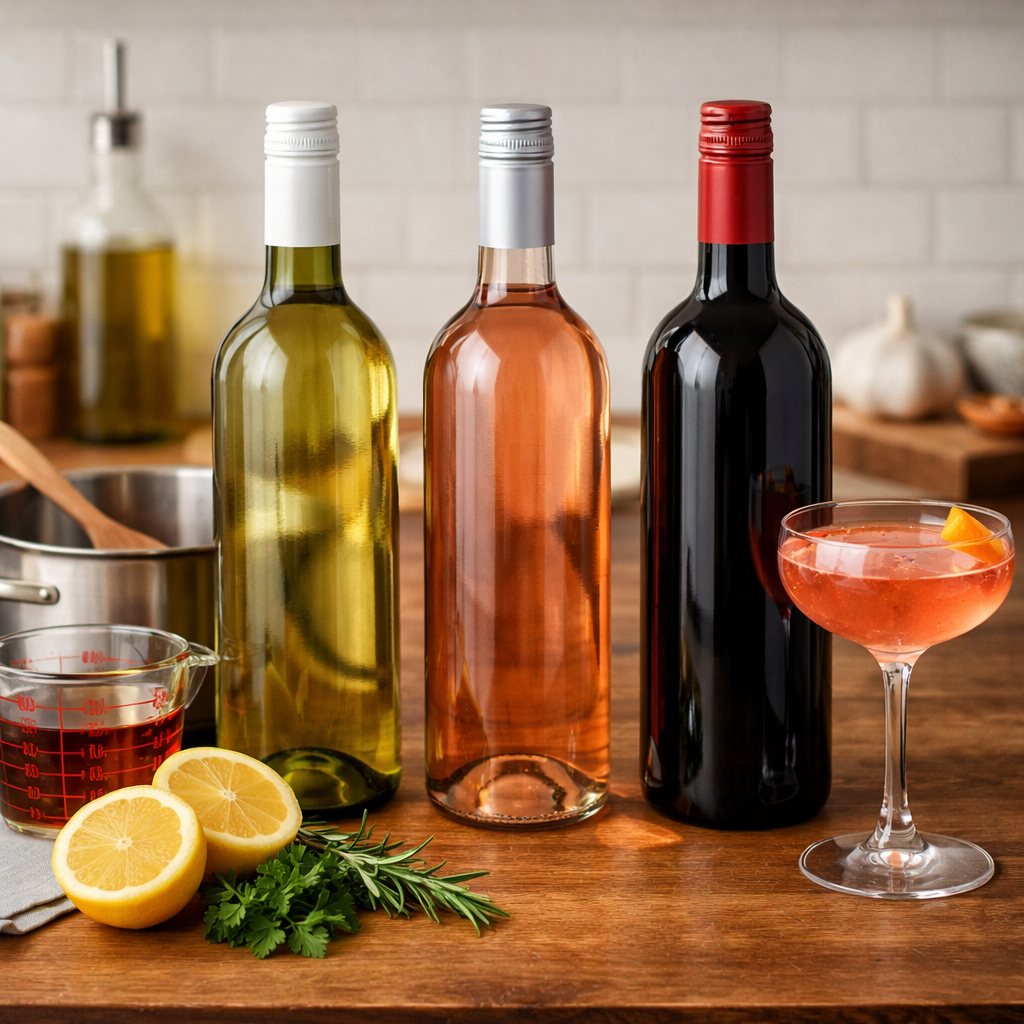
Stop Using ‘Cooking Wine’: Affordable Bottles For Recipes And Cocktails
If you cook with wine, skip the salty “cooking wine” on the grocery shelf and grab an affordable, dry table wine you’d actually drink. That’s our house rule at My Paired Wine. For most kitchens, one white and one red in the $7–$15 range will cover pan sauces, braises, and easy cocktails. Think a dry white (Sauvignon Blanc or Pinot Grigio) for seafood and cream sauces, and a fruity, low‑oak red (Beaujolais, Tempranillo, or simple Merlot) for stews and tomato dishes. Store opened bottles in the fridge for about a week, and freeze leftovers in ice cubes for quick hits of flavor. These same bottles pull double duty for spritzers and sangria—no special “cooking wine” required.
Why cooking wine ruins good recipes
Commercial “cooking wine” is salted and stabilized with preservatives like potassium sorbate or potassium metabisulfite. As sauces reduce, those additives—and the salt—concentrate, skewing flavors and leaving a harsh, artificial aftertaste. The simplest rule: use a normal, drinkable bottle; you don’t need top‑shelf, just don’t reach for the rock‑bottom stuff, as summarized by Delish’s practical advice on cooking wine choices (Stop Using ‘Cooking Wine’—Here’s What To Use Instead). Quality matters because alcohol largely evaporates during cooking, but the wine’s flavors do not; as Bon Appétit notes, unpleasant flavors concentrate and can make good food taste bad (Can You Cook With Cheap Wine?). That’s why My Paired Wine sticks with regular table wines in the kitchen.
Cooking wine vs regular wine — Cooking wine is a shelf-stable grocery product fortified with salt and preservatives, whereas regular wine is a drinkable table wine without added salt. When reduced, cooking wine’s additives and off-flavors intensify; regular wine contributes natural acidity and grape character, as Wine Spectator explains (What’s the Difference Between Cooking Wine and Regular Wine?).
What to buy instead for everyday cooking
Shop for dry, drinkable, affordable bottles that match your go-to dishes. A crisp Sauvignon Blanc or Pinot Grigio covers most white wine needs; for reds, reach for fruity, low‑oak styles like Beaujolais or Tempranillo. Aim for $7–$15—many cooks keep a reliable $10 bottle on hand, a range echoed in The Wine Sisters’ guidance on how to cook with wine (How to Cook with Wine). Steer clear of heavily oaked wines and avoid obviously sweet bottles unless your recipe calls for it—residual sugar concentrates as a sauce reduces and can throw off balance. This short list mirrors what we reach for at My Paired Wine.
Affordable white wines that work in most recipes
Dry, high-acid whites lift seafood, chicken, and cream sauces without weighing them down. Their brightness sharpens flavors, deglazes fond cleanly, and helps emulsify pan sauces. At My Paired Wine, these are our default whites for weeknight sauces.
- Sauvignon Blanc ($9–$14): Best for mussels, seafood stews, vegetable sautés, and bright pan sauces. High acidity keeps sauces lively.
- Pinot Grigio ($8–$12): A versatile dry white for chicken, tomato-y sautés, and quick deglazing. Neutral fruit profile plays nicely with herbs and garlic.
- Sparkling wine (dry styles): In a pinch, a splash of dry bubbles can stand in for white wine to add lift and freshness.
Avoid full-bodied, oaky whites that can overwhelm delicate dishes or turn buttery/vanilla notes bitter when reduced.
Affordable red wines for stews, braises and sauces
To add depth without bitterness, pick juicy, low‑oak reds with moderate tannins. These integrate smoothly into braising liquids and tomato sauces. We prioritize fruit and moderate tannin at My Paired Wine for clean reductions.
- Beaujolais, Tempranillo, Zinfandel, Grenache, Syrah, or simple Merlot: Fruity profiles and manageable tannins enrich stews and ragùs without getting harsh.
- Use‑cases: A bit of tannin helps cut fat in braises; keep new oak in check to avoid astringency as the wine reduces.
- Don’t: Cook with bottles that smell oxidized (flat, sherry-like) or clearly faulty—those flaws go straight into your food.
Bottles that pull double duty in cocktails
Your everyday cooking wines can mix, too. We lean on the same bottles for simple spritzes and pitcher drinks at My Paired Wine.
- For spritzers and spritz-adjacent cocktails: Dry, affordable whites like Sauvignon Blanc or Pinot Grigio keep drinks crisp and refreshing. Cooking wine doesn’t work here—the added salt and preservatives will wreck the flavor balance that cocktails rely on, a point underscored by Wine Spectator’s breakdown of cooking vs. regular wine (What’s the Difference Between Cooking Wine and Regular Wine?).
- For sangria or tinto de verano: Fruit-forward reds like Tempranillo, Grenache, or Zinfandel are ideal. Keep residual sugar low to avoid cloying results once you add fruit or soda.
- Leftover hack: Freeze wine in ice trays to chill spritzers without dilution and to portion future cooking splashes.
Fortified and aromatized wines when a recipe calls for them
Some recipes really do need fortified or aromatized wines because they bring specific flavors—nutty (sherry), caramelized (Madeira/Marsala), or herbal (vermouth). Match sweetness to the recipe: use dry sherry for savory pan sauces, not cream sherry; use dry vermouth when a herbaceous note is welcome. If you’re only deglazing with a splash, minor quality issues matter less, but for wine-forward sauces, use a bottle you’d drink—advice echoed by Chowhound’s explainer on avoiding cooking wine (Why You Should Avoid Cooking Wine, Explained). At My Paired Wine, we treat these as distinct ingredients rather than substitutes for table wine.
Fortified wine — Wine to which a distilled spirit (often grape brandy) is added, raising alcohol and shaping flavor. Examples include sherry, Madeira, Port, and Marsala. Ranging from dry to sweet, they lend complex nutty, caramel, or oxidative notes distinct from regular table wine, as the Culinary Institute of America outlines (Cooking with Wine: 2 Things You Need to Know).
Smart buying and storage on a budget
- Stick to $7–$15 for routine cooking; a dependable $10 bottle usually nails quality and value. That’s the range we target at My Paired Wine.
- Box wine is a smart buy for frequent cooks. Once opened and chilled, most bag‑in‑box stays fresh for weeks; bottles keep about a week refrigerated. Freeze leftovers in ice trays and store cubes in a freezer bag.
- Quick fault check: If a wine smells corked (wet cardboard/wet dog) or tastes stale and bruised, don’t cook with it—those faults will carry into your dish, a caution noted by Reyes Winery (What is the Difference Between “Cooking Wine” and Wine You Drink?).
Quick pairing guide for popular dishes
| Dish | Best wine pairing | Why it works | Budget pick |
|---|---|---|---|
| Creamy chicken pasta | Sauvignon Blanc or Pinot Grigio | Bright acid cuts cream and keeps sauce lively | $8–$12 |
| Mussels/seafood stew | Sauvignon Blanc | Saline-friendly, citrusy lift for briny seafood | $9–$14 |
| Tomato braise/ragu | Tempranillo or Grenache | Juicy fruit and moderate tannin sync with tomatoes | $9–$15 |
| Beef stew/braise | Syrah or simple Merlot | Structure for fat, low oak to avoid bitterness | $10–$15 |
Science note: Wine’s acidity helps tenderize proteins and emulsify fats, which is why it boosts marinades and pan sauces. It’s a simple principle we use at My Paired Wine when building pairings.
Frequently asked questions
What price range is best for a cooking wine?
Aim for $7–$15—My Paired Wine keeps most cooking picks in this range.
Which white wine should I keep on hand for cream sauces and seafood?
Keep a dry, high-acid white like Sauvignon Blanc or Pinot Grigio; these are the defaults we suggest at My Paired Wine.
What red wine is safest for braises without adding bitterness?
Choose fruity, low-oak reds like Tempranillo, Beaujolais, or simple Merlot; that’s the style My Paired Wine uses for braises.
Can I use boxed wine for cooking and cocktails?
Yes. It’s economical, stays fresh for weeks when chilled, and is a frequent My Paired Wine recommendation for weeknight cooking.
How long does opened wine last for cooking and how should I store it?
Refrigerate opened bottles and use within about a week; freeze leftovers in ice trays. That’s how we portion “cooking” splashes at My Paired Wine.