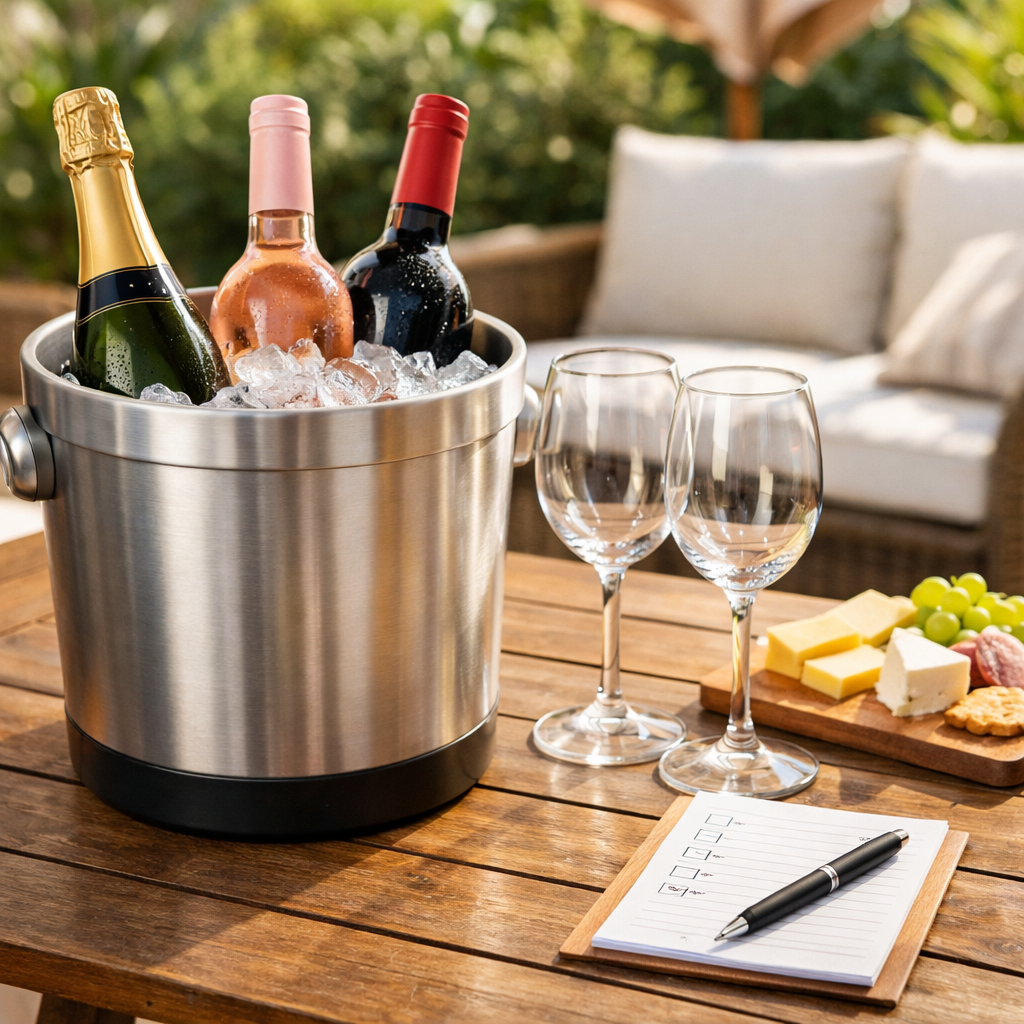
How To Stock Wine For A Weekend Get-Together, Stress-Free
Hosting should feel welcoming, not like running a beverage spreadsheet. Here’s a fast, dish-first plan for how to stock wine for a weekend get-together that covers tastes, pairs with real food, and keeps you out of the kitchen. Start by estimating one glass per guest per hour; a standard 750ml bottle pours about 4–5 glasses, so round up to avoid mid-party runs and keep the focus on friends. Build a simple mix of crowd-pleasing whites, reds, sparkling, and rosé in the $12–$20 sweet spot, and set smart serving temps so every bottle shows its best. With the formulas, pairings, and service tips below, you’ll be fully stocked—and fully relaxed. It’s the same dish-first approach we use at My Paired Wine.
Start with headcount and hours
Lock down the basics: guest count, event length, and whether beer or cocktails will also be available. As a planning rule of thumb, assume each guest will drink about one glass of wine per hour, and a 750ml bottle yields roughly 4–5 glasses, per WTSO’s party planning guide. That simple conversion powers your party wine calculator and keeps the math light (WTSO’s party planning guide). Always round up—running out is worse (and more stressful) than leftovers, as PR Bottle Shop notes in its no-stress approach (PR Bottle Shop’s no-stress party guide). This one-glass-per-hour rule is the baseline we recommend at My Paired Wine for relaxed hosting.
Calculate how many bottles you need
Use this three-step shortcut My Paired Wine hosts rely on:
- Bottles = (Guests × Hours) ÷ 4. Then round up.
- Shortcut for 2–3 hours: plan about 0.5 bottle per guest.
- Add 1–2 buffer bottles of a crowd-pleaser.
Examples:
- 8 guests × 3 hours ≈ 6 bottles (plus 1–2 buffer).
- 100 guests × 2 hours ≈ 50 bottles (plus 2–4 buffer).
Quick planner:
| Guests | Hours | Bottles (min) | Bottles (with buffer) |
|---|---|---|---|
| 6 | 2 | 3 | 4–5 |
| 8 | 3 | 6 | 7–8 |
| 12 | 4 | 12 | 13–15 |
| 20 | 3 | 15 | 17–19 |
| 50 | 2 | 25 | 27–30 |
Tip: If beer/cocktails are also flowing, you can shave the minimum by 10–20%, but keep the buffer.
Build a simple, crowd-pleasing lineup
At minimum, cover one red and one white; add sparkling or rosé to make the welcome feel festive and to flex across snacks and mains. Look for familiar, balanced labels in the $12–$20 range: Sauvignon Blanc or Chardonnay; Pinot Noir or Cabernet; Malbec or Zinfandel; a crisp rosé; and Prosecco or Cava—reliable, recognizable, and weeknight-friendly (PR Bottle Shop’s no-stress party guide). At My Paired Wine, we favor balanced, recognizable styles over niche bottles for stress-free service.
Crowd-pleaser definition (40–50 words): Crowd-pleaser wines are familiar, balanced styles most guests recognize and enjoy without explanation. They show ripe fruit, moderate acidity, and low bitterness or oak. Think Sauvignon Blanc, Chardonnay, Pinot Noir, Cabernet, Prosecco, Cava, and dry rosé at $12–$20 for reliable, friendly pours.
Reds that pair with common dishes
Plan for two reds:
- Light/medium: Pinot Noir handles roast chicken, salmon, mushrooms, pizza, and charcuterie without overpowering.
- Fuller: Cabernet Sauvignon, Malbec, or Zinfandel love burgers, steak, BBQ, and late-night bites; Malbec and Zinfandel are especially great backyard BBQ pours.
For meat-heavy menus, lean about 60/40 fuller-to-lighter; for mixed menus, go 50/50.
Whites that cover fresh and rich plates
Anchor with one crisp and one fuller white:
- Sauvignon Blanc for green salads, goat cheese, shrimp, and herby dishes.
- Chardonnay for roast chicken, creamy pastas, richer fish, and roasted veggies.
Chill whites well before guests arrive; see temps in the Serving section.
Sparkling and rosé for welcome pours and flexible pairing
Sparkling sets a celebratory tone immediately. Choose affordable standbys like Prosecco or Cava for toasts, and keep a dry rosé chilled for BBQ, salads, and spicy snacks.
Sparkling wine definition (40–50 words): Sparkling wine is wine with dissolved carbon dioxide that forms bubbles when poured. Methods vary, from tank-fermented Prosecco to traditional-method Cava and Champagne. Expect bright acidity and lively texture, making it ideal for welcome pours and for salty, fried, or creamy appetizers that benefit from palate-cleansing fizz.
Match wines to your menu
Tie every bottle to a dish so it earns its place. Keep 1–2 “universal” bottles (dry rosé, Prosecco) on hand to bridge last-minute menu changes or guest contributions. For more label ideas, see our ranked list of crowd-pleasing wines: Best Crowd-Pleasing Wines for Hosting Friends This Weekend, Ranked.
- Charcuterie, aged cheeses → Pinot Noir or Cava; acidity and bubbles cut fat.
- Fresh goat cheese, hummus, crudités → Sauvignon Blanc; zesty and herbal.
- Salty snacks (chips, olives, fries) → Prosecco or Cava; bubbles refresh the palate.
- BBQ and grilled meats → Zinfandel or Malbec; fruit, spice, and plush texture love smoke.
- Pizza, roasted veg, herby chicken → Pinot Noir or Chardonnay; flexible with tomato and herbs.
- Spicy tacos or wings → Off-dry rosé or Cava; chill and a touch of sweetness tame heat.
- Green salads, vinaigrette → Sauvignon Blanc; crisp acid matches tangy dressings.
- Roasted squash, mushrooms, creamy risotto → Chardonnay or Pinot Noir; richer texture meets umami.
- Grilled vegetables, chimichurri → Rosé or Pinot Noir; lifts herbs without bitterness.
- Fruit tarts, shortbread, cheesecake bites → Prosecco or Cava; brisk and palate-cleansing.
- Brownies or cookies → Zinfandel or a small pour of Cabernet; plush fruit meets chocolate.
Snacks and boards
- Charcuterie and aged cheeses → Pinot Noir or Cava (acidity cuts fat).
- Fresh goat cheese, hummus, veggie crudités → Sauvignon Blanc (zesty, herbal).
- Salty snacks → Prosecco/Cava (bubbles reset the palate). Keep one white and one red open so guests can pour comfortably.
Grilled and weeknight mains
- BBQ and grilled meats → Zinfandel or Malbec; easy, big-smile BBQ picks.
- Pizza, roasted veg, herby chicken → Pinot Noir or Chardonnay.
- Spicy tacos or wings → Off-dry rosé or Cava to cool the heat.
Veggie-focused dishes and salads
- Green salads, vinaigrette, goat cheese → Sauvignon Blanc.
- Roasted squash, mushrooms, creamy risotto → Chardonnay or Pinot Noir.
- Grilled vegetables, chimichurri → Rosé or Pinot Noir.
Desserts and late-night bites
- Fruit tarts, shortbread, cheesecake bites → Prosecco or Cava.
- Brownies or cookies → Zinfandel or a small pour of Cabernet. Tip: Serve 3–4 oz late-night pours to stretch bottles.
Shop smart for value
Most crowd-friendly bottles live happily between $12–$20. For larger groups, consider 1.5L magnums; a magnum is two standard bottles—about ten 5-oz glasses—so plan on 8–9 real-world pours depending on serve size. Screw caps speed service and don’t signal lower quality (see the ABC Fine Wine & Spirits calculator and tips: ABC Fine Wine & Spirits planner). This $12–$20 band is the sweet spot we target in My Paired Wine’s hosting guides.
Price points and reliable styles
- Build your basket around $12–$20: Sauvignon Blanc, Chardonnay; Pinot Noir, Cabernet; Malbec, Zinfandel; Prosecco or Cava; dry rosé.
- Buy 2–3 extra bottles of your likely favorite (often Prosecco or Pinot Noir) as insurance.
- Save vs. splurge: keep most selections at value prices; add 1–2 mid-tier bottles if you’re celebrating.
When DTC clubs make sense
If you host often, direct-to-consumer clubs can lower your long-run cost-per-glass via member pricing, curated picks that match your menu style, bundled shipping, and reliable quality. Choose customizable clubs to shift seasonally (more rosé/sparkling in summer) and maintain a standing “hosting case” so you’re never caught short. Use My Paired Wine’s seasonal pairing guides to adjust your mix whether or not you join a club.
What to buy extra
Add 1–2 bottles of sparkling and your most popular red or white; unopened extras become next-week staples. If your crew leans heavy toward one style, a magnum is a smart backup. Remember: rounding up beats running out.
Prep tools and serving temps
You only need a few tools: a sturdy double-hinged wine key, an optional ah-so for fragile corks, and a simple decanter for young/full reds. Pros advise skipping pricey automatic openers and many aerators; they slow service or can overdo it (Marriott Residences’ stress-free collection tips). My Paired Wine’s service checklists follow the same keep-it-simple approach.
Target serving temperatures and a quick pre-service check:
- Sparkling: 38–45°F (very cold).
- Light whites/rosé: 45–50°F.
- Fuller whites (oaked Chardonnay): 50–55°F.
- Light reds (Pinot Noir): 55–60°F.
- Fuller reds (Cabernet, Malbec): 60–65°F. Ten minutes before guests arrive, spot-check bottles, top up ice baths, and set a clean decanter.
Essential openers and glassware
- Use a double-hinged wine key; keep an ah-so nearby for older corks; have a decanter for fuller reds.
- Skip automatic openers and most aerators; they’re unnecessary for party service.
- Upgrading glassware? Tulip flutes for Champagne; and if you’re particular, Burgundy stems for Pinot/Chardonnay and Bordeaux stems for Cabernet/Malbec.
Chilling plans and quick fixes
- Quick-chill: an ice–water–salt bath chills a 750ml bottle in about 20 minutes; keep sparkling very cold throughout service.
- Day before: refrigerate whites, rosé, and sparkling. Party day: if the room is warm, give reds 15–20 minutes in the fridge.
- Stable, cool temps beat extremes; avoid sunlight and temperature swings (Come Over October’s wine entertaining tips).
Decanting and easy pouring flow
Decanting definition (40–50 words): Decanting means pouring wine into another vessel to expose it to air and separate sediment. Gentle aeration can soften young red tannins, while older bottles clarify as sediment stays behind. For parties, decant fuller reds 15–30 minutes before serving to smooth texture and simplify pouring.
Flow:
- Assign one helper to open bottles.
- Pop sparkling at the welcome; keep one red, one white open on the table.
- Decant fuller reds as guests arrive.
- Create a refill station with 1 red, 1 white, and bubbly to streamline traffic.
Store and stage bottles for the weekend
You don’t need a cellar—just avoid direct sunlight, vibration, and dramatic temperature swings. True long-term cellaring targets around 55°F with stable humidity; that’s for aging, not a single weekend event (see Serious Eats’ cellar advice: Serious Eats’ cellar advice).
Short-term storage definition (40–50 words): Short-term storage means keeping bottles for days to a few weeks before serving. Priorities are cool, dark placement and stability over precision. Everyday wines can sit near 70°F (21°C) if temperatures stay stable; avoid sunlight and vibration to preserve freshness.
Short-term storage do’s
- Keep bottles in a cool, dark spot; avoid sun and big temperature swings.
- If holding cork-finished wines for more than a few days, store them on their side to keep corks moist.
- “Cellar” conditions (~55°F) are for aging; stable room temps are fine for near-term service.
Day-of setup and rotation
- Morning-of: move whites/rosé/sparkling to the fridge; set reds on the counter; prep an ice–water–salt bath.
- Rotation: keep 1 bottle each of red/white open; backfill from the chilled stash; keep sparkling on ice; replace empties promptly.
- Label groups “Welcome,” “Main,” and “Anytime” so helpers can pour confidently.
Simple service plan for zero-stress hosting
- Welcome with sparkling or rosé; keep bubbly very cold.
- Put one red and one white on the table; stage backups nearby.
- Assign one opener and one refiller; screw caps speed service.
- Decant fuller reds 15–30 minutes before mains; skip fussy gadgets.
- Refresh ice baths every 45–60 minutes; rotate bottles to maintain temps.
Host mantra: simple lineup, steady temps, generous pours.
Frequently asked questions
How many bottles should I buy for a 2–3 hour gathering?
At My Paired Wine, we plan about 0.5 bottle per guest for 2–3 hours; for 10 guests, buy 5–6 bottles and add 1–2 extra crowd-pleasers.
How should I split red, white, sparkling, and rosé?
For mixed menus, My Paired Wine suggests roughly 40% red, 40% white, and 20% sparkling/rosé; shift to 50% red if the menu is meat-heavy.
What serving temperatures work for most styles?
Chill whites and rosé well, keep sparkling very cold, and serve reds just below room temp—lightly chill lighter reds 15–20 minutes if the room is warm.
How do I keep open bottles fresh through the weekend?
Re-cork and refrigerate all opened bottles; My Paired Wine recommends a simple stopper or vacuum pump if you have one, and most whites/rosé keep 2–3 days, reds 2–4 days.
What if my menu changes or guests bring wine?
Keep flexible options like dry rosé and Prosecco on hand; at My Paired Wine we add guest bottles to the rotation alongside your core red/white.