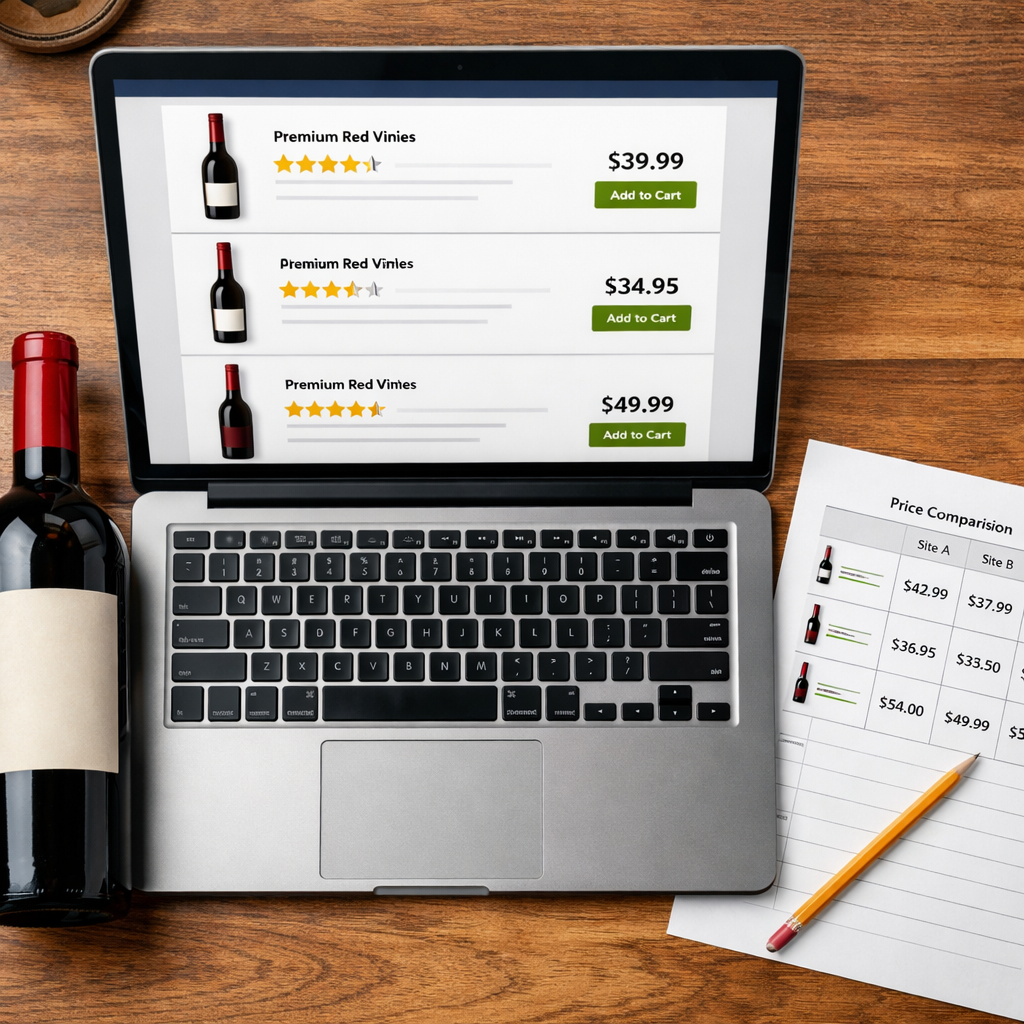
How to Find Top-Rated Premium Wines Online Without Overpaying
Finding top rated affordable premium wine labels sold online doesn’t require guesswork or overspending. Start with your taste and budget, use trusted discovery tools, compare real “landed” prices across retailers, vet the seller, and lean on DTC wine perks like member pricing and bundles. This guide walks you through each step—so every bottle fits your meal plan and your wallet. At My Paired Wine, we keep it dish‑first and budget‑aware.
Start with your taste and budget
The fastest way to value is to anchor selection to your own palate and spending guardrails. Your taste profile is your preferred levels of fruit, acid, tannin, oak, and body across red and white. Your budget ceiling is your max per-bottle and per-order landed spend (price + shipping + tax). Taste‑matching apps, crowd ratings, and a clear wine budget help you quickly filter to value wine—including premium wine under $30—without sacrificing quality. My Paired Wine’s dish‑first framework anchors picks to real meals and price guardrails so value rises to the top faster.
Two-step setup:
- Pick 2–3 favorite dishes you cook or order often (e.g., steak Fridays, curry nights, sushi takeout).
- List 3 wines you’ve enjoyed recently to anchor flavor and price tolerance.
Clarify what you like in red and white by dish
Map dishes to reliable pairing anchors to narrow results fast:
- Red
- Steak or burgers → Cabernet Sauvignon or Syrah/Shiraz
- Pizza or marinara pasta → Sangiovese or Barbera
- Duck → Pinot Noir
- White
- Thai curry → off‑dry Riesling
- Roast chicken → Chardonnay
- Sushi → Sauvignon Blanc
Use taste‑matching apps that learn from rated bottles; and lean on dish‑first pairing guides from My Paired Wine. Sippd connects to Wine.com, improves as you rate, and starts by having you rate three wines to build a taste match (see The Lush Life’s overview). thelushlife.xyz guide to buying wine online
Pairing typicity (45 words): Typicity is how well a wine expresses expected traits of its grape and region—aromas, structure, and flavor. Choosing varieties with strong typicity for your dish (for example, crisp, herbal Sauvignon Blanc with green herbs) increases pairing success and delivers consistent results across brands and vintages.
Set a per-bottle target and total landed cost ceiling
Prevent overspend by setting two numbers: a target price per bottle and a total landed cost ceiling for your whole order.
Mini calculator:
- Inputs: target $/bottle, bottles in cart, estimated shipping, local tax rate
- Landed $/bottle = ((Bottle price × Bottles) × (1 + tax) + Shipping) ÷ Bottles
Use realistic benchmarks from global price‑comparison engines like Wine‑Searcher (noting typical and lowest market prices) to set targets. affordable wine buying guide with price-engine tips
Landed cost (45 words): Landed cost is the true, all‑in price to your door: bottle price plus shipping, taxes, and any fees. It reveals whether a supposed deal actually beats other offers. Always compute landed dollars per bottle so multi‑bottle discounts and free‑shipping thresholds are compared fairly and evenly.
Use trusted discovery tools
Blend quick crowd data for everyday buys with expert wine reviews for higher‑stakes bottles. Label scanning app options, Vivino ratings, critic notes, and retailer filters help you build strong shortlists without the hype. Pairing resources like My Paired Wine complement these tools with dish‑first, budget‑clear picks.
Tools snapshot:
| Tool | Best for | Data source | Standout features | When to trust most | Cost |
|---|---|---|---|---|---|
| Vivino | Fast crowd ratings and reviews | Peer reviews | Label scan, deal flags, style summaries | Weeknight/value picks | Free |
| Sippd | Personalized taste matching | Your ratings + retail | Connects to Wine.com, learns from ratings | Taste‑driven shopping by dish | Free |
| Wine‑Searcher | Wine price comparison | Global retailer data | Lowest/typical prices, vintage availability | Benchmarking best price online | Free/Pro |
| Retailer filters | Narrowing to style/price/region | Store inventory | Filters for price, style, ratings, provenance | Store‑specific hunting and bundles | Free |
Scan labels and crowd ratings for shortlists
Vivino helps shoppers identify wines via crowd reviews and ratings, and it flags deals—useful when you’re hunting strong value across prices from under $10 to $150+. According to Vivino’s scale stats, users number over 60 million, scanning about 2 million labels daily across 15M+ wines. best wine apps comparison with Vivino stats
Save scans and tasting notes as you go; apps make it easy to track wish lists and past bottles so future picks get faster and smarter (as covered in CityBeat’s affordability guide).
Layer in expert notes for rare or collectible bottles
Peer reviews shape prices across most segments, while expert validation matters more as bottle stakes rise—think fine or cellar‑worthy wines. Use critic or sommelier notes and producer tech sheets to confirm provenance and drink windows. research on expert vs peer signals in wine markets
Collectible wine (45 words): A collectible wine is a limited‑production bottle with strong demand, critical acclaim, aging potential, and secondary‑market trading. Buyers expect documented provenance, proper storage, and price resilience. Think top regions, single vineyards, or special cuvées whose scarcity and reputation can support appreciation over time for collectors.
Compare real prices, not stickers
A low sticker isn’t always the best deal. Do a wine price comparison across retailers, calculate total landed cost, and use a shipping tax calculator or your state’s rate to avoid traps. My Paired Wine’s value checklists start with landed $/bottle so you won’t chase false deals.
Workflow:
- Build a shortlist (crowd + critic + taste match)
- Cross‑check prices across multiple retailers/marketplaces
- Compute landed $/bottle for each cart scenario
- Pick the best price online that meets your shipping/timing needs
Check multiple retailers and marketplaces
Inventory and pricing vary widely—don’t rely on a single site:
- Total Wine lists 7,500+ wines online, with roughly 82% priced above $30.
- K&L Wines offers 10,000+ wines, including 2,000+ under $25.
- Wine Library carries 3,000+ wines, about half under $30.
Benchmark typical and lowest offers by running each candidate through a comparison engine. Wine Folly’s comparison of online wine shops
Calculate total landed cost including shipping and tax
Step-by-step:
- Note bottle price and quantity.
- Add shipping (flat, per‑bottle, or threshold).
- Add tax for your destination.
- Divide total by bottles → landed $/bottle.
Reminder: Always include shipping and tax in your comparison; this single check prevents most overpays (as flagged in CityBeat’s affordability guide).
Threshold shipping (45 words): Threshold shipping is a retailer policy where shipping turns free or discounted once your cart reaches a minimum spend or bottle count. Hitting that threshold often drops landed cost per bottle below single‑bottle deals, especially when stacking mixed‑case discounts, member pricing, or seasonal promotions online.
Vet the seller before you buy
Protect your money and your bottles. Check seller reputation, wine storage conditions, return policy, and online wine marketplace safety details such as insurance and temperature control. My Paired Wine’s buyer checklists flag storage and return red‑flags so you can purchase with confidence.
Quick seller checklist:
| Item | What to look for | Why it matters |
|---|---|---|
| Storage notes | Cellar temps/humidity, off‑site warehouses | Reduces heat/light damage risk |
| Temperature control | Cold‑chain options, seasonal holds | Protects wine in transit |
| Return policy | Tasting returns, clear timelines | Recourse if bottle is flawed |
| Insurance | Breakage/leakage coverage | Financial protection |
| Delivery options | Signature, pickup, weather holds | Prevents porch/heat risk |
| Restocking fees | Disclosed or waived for issues | Avoids surprise costs |
| Provenance docs | Receipts, producer notes, prior ownership | Validates authenticity |
| Auction terms | Buyer’s premium, final‑sale rules | Sets expectations before bidding |
Review reputation, storage notes, and return terms
Prioritize operators with clear tasting‑return policies and visible storage standards, plus temperature‑controlled shipping. Curated selections from reputable retailers can help match quality to budget. K&L’s “Direct Buy” filter highlights retailer‑imported wines, a useful provenance signal noted in retailer profiles.
Understand buy-it-now versus auction rules
Auction vs buy‑it‑now (45 words): Buy‑it‑now listings have fixed prices and standard retail‑style return policies. Auctions accept bids over time, often with final‑sale terms, variable buyer’s premiums, and limited returns. Auctions can reveal bargains but demand stricter provenance checks, budget discipline, and comfort with as‑is risk for higher‑value wine purchases.
WineBid functions like eBay for wine and attracts collectors/resellers—expect auction dynamics and final‑sale norms highlighted in retailer comparisons.
Confirm provenance for premium bottles
For premium labels, confirm wine provenance with quick tech checks and documentation to reduce counterfeit and mishandling risk.
Verify serialization or QR codes and vintage details
Scan serialization or QR codes against producer records and confirm the listed vintage actually exists for that producer. Packaging tells stories: too‑pristine or artificially distressed labels can signal counterfeits. guide to common wine fraud tactics
Provenance (46 words): Provenance is the documented history of a bottle’s origin, storage, and ownership. Strong provenance includes producer records, serialization or QR matches, storage logs, and seller receipts. It builds confidence the wine is genuine and was kept in conditions that preserve quality, longevity, and market value over.
Request storage and ownership history when applicable
For higher‑end purchases, ask for cellar photos, temperature logs, and invoices; prioritize sellers with producer‑backed verification. The EU Joint Research Centre released ERM‑AE003, a certified reference material used to check authenticity (vintage, origin, sugar additions). Wine fraud costs the EU an estimated €1.3B annually; seizures topped 1–1.7M liters in 2020–2021. EU Joint Research Centre report on wine fraud
Optimize value with DTC and bundles
Use DTC wine strategies—member pricing, wine club benefits, mixed case building, and free shipping threshold math—to lower landed cost without compromising quality. My Paired Wine surfaces dish‑fit DTC offers and case strategies without the hype.
Leverage winery clubs and member pricing
Join DTC winery clubs for consistent discounts, curated shipments, and bundled shipping. AI personalization in wine retail has surged—from about 15% adoption in 2020 to roughly 80% of shops today—powering smarter recommendations and offers. The online wine market is also growing (about $16.6B in 2024 to $18.1B in 2025), increasing competitive DTC deals (covered in InVintory’s apps report).
Choose customizable clubs so selections align with your go‑to dishes (e.g., curry nights, steak Fridays).
Use mixed-case deals and free-shipping thresholds
Stacking flow:
- Start with a mixed‑case discount.
- Add member pricing.
- Hit the free‑shipping threshold.
- Compute landed $/bottle and compare to multi‑bottle retailer promotions and daily deals.
Build cases around recurring meals (taco Tuesday, pasta night) so every bottle earns its place at the table.
Value snapshot (illustrative math):
- Retail: $28 bottle × 6 = $168 + $20 ship + 8% tax → landed ≈ $33.80/bottle
- DTC member: $28 − 15% = $23.80 × 12 = $285.60 + free ship + 8% tax → landed ≈ $25.70/bottle
Pair by meal to make every bottle count
Match bottles to tonight’s dish to get immediate payoff and fewer misses.
Red pairings by dish
- Steak or burgers: value Cabernet Sauvignon or Syrah/Shiraz; premium Napa Cab or Northern Rhône Syrah.
- Pizza/marinara pasta: Sangiovese or Barbera; premium Chianti Classico Riserva, or Barolo for richer toppings.
- Duck or mushroom risotto: Pinot Noir; premium Burgundy village‑level.
- BBQ ribs: Zinfandel; premium old‑vine Lodi/Amador Zinfandel.
Use crowd ratings for everyday picks and consult expert notes for pricier bottles as the stakes rise (supported by research on peer vs expert influence).
White pairings by dish
- Thai/Indian curry: off‑dry Riesling or Gewürztraminer; premium Mosel or Alsace single‑vineyard Riesling.
- Roast chicken/creamy pasta: Chardonnay (unoaked for lean, oaked for buttery); premium Sonoma Coast or Chablis.
- Sushi/poke: Sauvignon Blanc or Albariño; premium Sancerre or Rías Baixas single‑vineyard.
- Tacos/fresh salsas: Verdejo or Vinho Verde; premium high‑altitude Godello.
Scan labels and cross‑check prices to keep total landed cost aligned with your meal plan.
Track what works and refine over time
Close the loop: simple tracking and alerts make each purchase better than the last. Use a tasting notes app, set price alerts, and keep a light cellar tracker for wine valuation trends. My Paired Wine’s weekly guides reinforce this habit with meal‑led picks and clear pricing cues.
Save tasting notes and favorites
Use apps to store tasting notes, wish lists, and past bottles so your next shortlist is easier and smarter. Tip: tag each bottle with three quick notes (dish, mood, price cue), like “steak, bold, <$25.” Top wine apps also offer label scanning, valuation, and cellar mapping for organization (outlined in InVintory’s comparison), and CityBeat highlights how saving notes speeds future value finds.
Adjust alerts for price drops and new vintages
Set alerts on engines and retailer sites for favorite producers, regions, and dish‑pairing keywords. For collectors, inventory and valuation tools like InVintory help decide drink‑now vs hold using a sommelier‑curated database of 2M+ wines. Pandemic‑era e‑commerce growth (~33% online surge) sped up deal cycles—alerts catch short‑lived bargains noted in industry app roundups.
Follow My Paired Wine for dish-first tips
We help you pair smarter—by meal—across red and white, so every bottle earns its place at the table, whether you shop retail or DTC. Get fresh, high‑utility pairing guides and value alerts weekly.
Get new pairing guides and value alerts
Subscribe to our newsletter for weekly dish‑led pairing tips, top rated affordable premium wine labels sold online, and deal‑spotting checklists. Watch for upcoming guides: curry pairings deep dive, duck pairings across price tiers, and our DTC vs retail value playbook.
Join us on Facebook and Instagram
Follow My Paired Wine on Facebook and Instagram for quick pairing reels, seasonal picks, and community Q&A. Tag your meal photos for feedback on pairings and budget ideas—we love helping you match bottles to real‑life menus.
Frequently asked questions
How do I balance critic scores with crowd ratings?
Use crowd ratings to shortlist everyday bottles, then check a critic’s note for pricier or cellar‑worthy wines. My Paired Wine’s guides show when to lean on experts.
What seller policies protect me when buying online?
Look for tasting‑return policies, visible storage notes, and temperature‑controlled shipping. My Paired Wine’s buyer checklists help you confirm fees, insurance, and delivery windows.
When do auctions make sense for premium wines?
When you know typical market prices and can verify provenance. My Paired Wine outlines the risks, final‑sale terms, and buyer’s premiums to expect.
How can DTC winery clubs lower my per-bottle cost?
Member pricing, curated shipments, and bundled shipping can push landed $/bottle below retail. My Paired Wine explains how to stack mixed‑case offers and shipping thresholds.
What quick checks help spot counterfeit or mishandled bottles?
Scan serialization/QR codes, confirm the vintage exists, and inspect labels for suspicious wear. My Paired Wine recommends asking for storage history on premium bottles and avoiding sellers without temperature‑control options or clear returns.