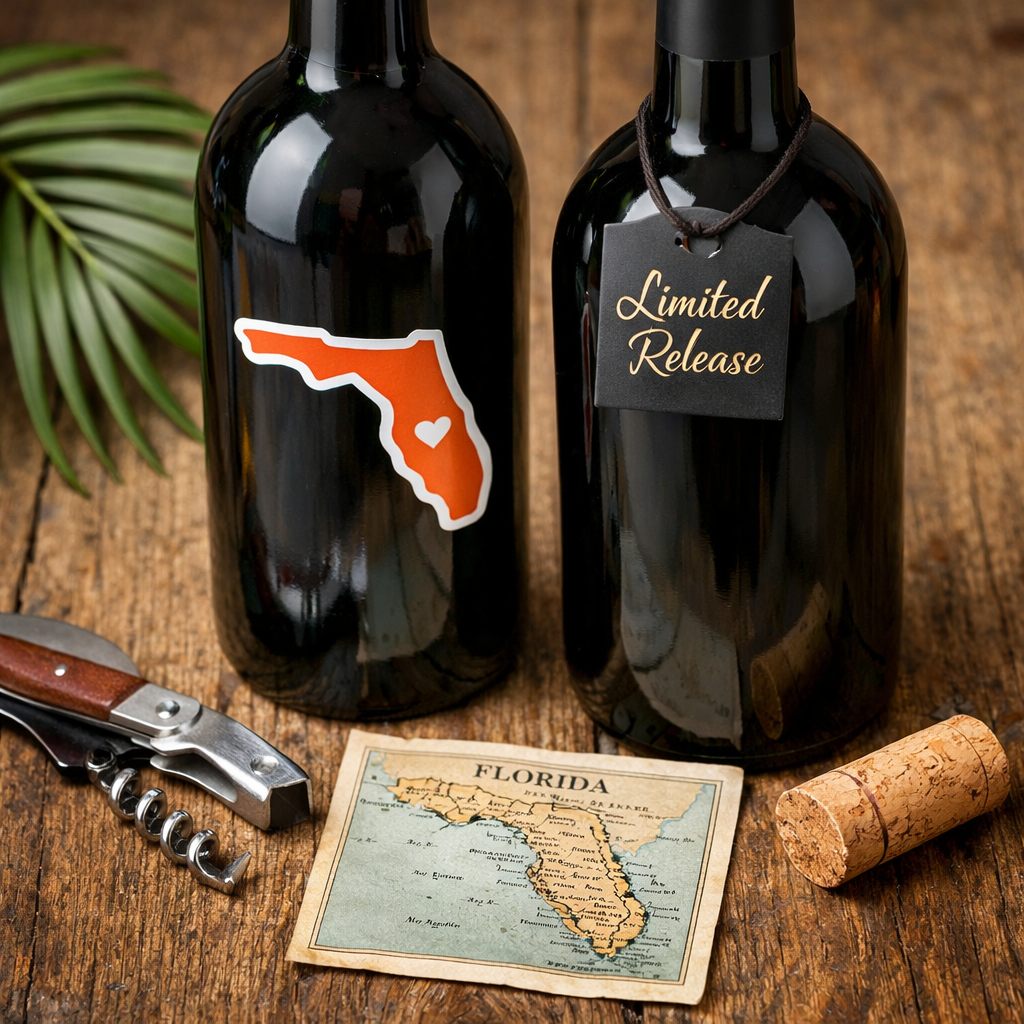
Florida Exclusive vs Limited-Release: Which Rare Wines Are Truly Local?
Some rare wines in Florida truly are local—but labels like “Florida exclusive” and “limited-release” don’t guarantee it. Florida exclusive usually means where a bottle is sold, not where the fruit was grown. Limited-release signals small production, not place. If you want a bottle that’s authentically Floridian, verify Florida-grown grapes and/or vinification in-state, then match the style to tonight’s dish. This My Paired Wine guide clarifies the difference, shows you how to verify origin in two minutes, and gives ready-to-use pairing picks (with same-day pickup or delivery when possible).
What Florida exclusive means
“Florida exclusive” means a wine is sold only through Florida channels—such as tasting rooms, in‑state retail, or a state-only allocation—not that its grapes were grown in Florida.
Use it as a sales access cue, not an origin claim. A Florida-only release can be locally sold yet made from out-of-state fruit. For truly local Florida wine, look for Florida-grown fruit and/or vinification in Florida.
Think: Florida exclusive wine = geography-limited access; local Florida wine = Florida-grown grapes and/or made in-state. Expect to encounter “Florida-only release” language at a Florida tasting room or in-state retailers.
What limited-release means
Limited-release wine is a small-batch bottling with constrained production volumes, often tied to experimental lots, specific barrels, or a defined case count. Access may be allocated nationally, club-only, or event-based. It’s a signal of scarcity, craft, or novelty—but it does not confirm Florida origin or local fruit.
Why it matters: limited runs can travel widely via national allocations, so rarity ≠ Florida-grown or Florida-made.
How to define truly local wine in Florida
A truly local Florida wine is produced from Florida-grown fruit and/or vinified in Florida, with clear sourcing on the label or producer site. Look for vineyard or county names, “Produced & Bottled in [Florida city],” and harvest year. Exclusivity or scarcity alone doesn’t prove Florida-grown grapes.
Criteria to compare localness and value
Use these four criteria to judge any “Florida exclusive vs limited-release wine” claim quickly and consistently:
- Production/sourcing: Where were grapes grown and where was the wine vinified?
- Distribution channel: Is availability confined to Florida or spread across states?
- Scarcity mechanics: Is rarity driven by low volume or by channel/geography?
- Pricing/transparency: What’s the total price after taxes, shipping, and fees?
Quick 4-point checklist for shelf or cart:
- Find “Grown/Produced/Bottled in Florida” and county/vineyard details.
- Check the winery distribution map for in-state vs multi-state access.
- Ask for case count or batch size; note whether access is allocated.
- Add up bottle + tax + shipping + club/allocation fees before deciding.
Production and sourcing
Start with the label. Prioritize bottles that list Florida counties or vineyards, harvest year, and statements like “Grown in Florida,” “Produced & Bottled in [Florida city], FL,” or “Estate Bottled.” If details are thin, check the winery’s vineyard/sourcing page.
Provenance defined (40–50 words): Provenance is the documented origin and handling of a wine—where the grapes were grown, where the juice was fermented and aged, and who bottled it. You can verify it via front/back labels, producer tech sheets, or sourcing disclosures on the winery site, newsletters, and vineyard pages.
Distribution channel
“Florida exclusive” typically means tasting-room only or in-state retail distribution. If you can add the same bottling to your cart in multiple states, the wine is not Florida-exclusive in practice and likely a limited-release allocated nationally.
Quick test: multi-state availability = scarcity, not locality.
Scarcity mechanics
Rarity comes from two places:
- Low volume (limited-release, small-batch bottlings).
- Controlled access (Florida-exclusive channels or club-only drops).
Either path can be authentic—or just marketing—so always corroborate with sourcing data and label origin statements.
Allocation defined (40–50 words): Allocation is a controlled distribution system that rations limited wine to specific buyers—members, mailing lists, or retailers—based on purchase history or priority tiers. It manages demand and scarcity but doesn’t speak to grape origin. Allocations can be local, regional, or national in scope.
Pricing and transparency
Drip pricing defined (40–50 words): Drip pricing is the practice of revealing add-on fees late in checkout (e.g., handling, club surcharges, adult-signature shipping) that inflate the total beyond the displayed bottle price. Federal regulators have focused on unfair or deceptive fees, noting 12,000+ public comments calling for clearer disclosure [source: https://www.federalregister.gov/documents/2025/01/10/2024-30293/trade-regulation-rule-on-unfair-or-deceptive-fees].
Do the math: bottle + tax + shipping + allocation/club fees. Then judge value.
Florida exclusive vs limited-release: side-by-side evaluation
| Factor | Florida Exclusive | Limited-Release |
|---|---|---|
| Origin proof | Must be verified separately; exclusivity ≠ Florida-grown | Must be verified separately; small-batch ≠ Florida-grown |
| Sales channels | Tasting room, in-state retail, Florida-only allocation | National allocation, club members, select retailers |
| Scarcity type | Geography/channel-controlled | Low volume/case-count driven |
| Typical value checks | Confirm Florida-grown or FL vinified; compare total price to other in-state options | Confirm style/quality; compare to similar non-limited wines and check secondary-market realism |
| Pairing cues | Match to local seafood, BBQ, and produce; think Florida-grown grapes | Let style lead: citrusy whites for ceviche, mid-weight reds for burgers |
Bottom line: localness hinges on verified Florida-grown grapes and/or vinification in Florida plus transparent total pricing. Label hype about exclusivity or rarity is secondary.
Provenance and label signals
Look for: “Grown in Florida,” “Estate Bottled,” county or vineyard names (e.g., Alachua, Lake), and “Produced & Bottled by [Florida winery].” If vineyard details are absent, verify on the producer site.
Micro-checklist:
- Vintage year
- Vineyard/county or region
- Produced/Bottled statements
- Back-label sourcing note
- Florida city, FL address
Where bottles are actually sold
Open the producer’s “Find Us” or distribution map. An in-state cluster suggests Florida exclusive; multi-state retail typically means broader allocation. When in doubt, call the Florida tasting room and ask whether that bottling ships out-of-state.
Volume, availability, and perceived rarity
Ask for case production or batch size. Tiny runs aren’t inherently local if the fruit isn’t Florida-grown. Seasonal or experimental notes can justify small lots—but still require origin proof.
Price, fees, and real-world value
Total your cost before you tap “buy.” Include shipping, adult-signature, club/packing fees. Regulators have spotlighted hidden and misleading fees, so be skeptical of premium pricing justified only by “allocation” or “collector” language.
Club and allocation releases in Florida
Club/allocation releases defined (40–50 words): These are wines offered first—or only—to members or high-priority buyers based on loyalty or purchase history. They may include special cuvées or single-vineyard lots. Access rules don’t reveal origin; confirm Florida-grown fruit or Florida vinification on labels or producer pages.
Guidance: Join when you regularly buy from a Florida winery using Florida-grown grapes and value member perks. Otherwise, prioritize open-market wines with clear provenance. At My Paired Wine, we favor transparent sourcing over access hype.
How to verify a wine’s Florida origin fast
Use this 2-minute flow:
- Label check: Find “Grown in Florida,” county/vineyard, and “Produced & Bottled in [FL city].”
- Site/distribution: Scan “Vineyards” and “Find Us” pages; confirm Florida sourcing and in-state access.
- Press/grower confirmation: Look for local press or grower mentions tied to Florida counties.
- Fee/secondary-market scan: Compare total cost to similar bottles and note any fee-driven price inflation.
Tip: Save screenshots for easy re-verification and repeat buys—especially along the Florida Wine Trail. My Paired Wine uses the same quick-check flow so you can confirm provenance before pairing.
Label phrases and certifications to look for
Phrases that signal local fruit or vinification:
- “Grown in Florida,” “Estate Grown,” “Estate Bottled”
- “Produced & Bottled by [Winery], [Florida city], FL”
- County or vineyard names (Alachua, Lake, Polk, etc.)
Use caution with “Cellared & Bottled by” or “Vinted & Bottled by” without vineyard disclosure.
Winery site and distribution map checks
Open “Vineyards,” “Our Grapes,” or “Find Us.” Confirm vineyard locations in Florida and whether shipping or sales are Florida-only or national. If details are thin, email or use site chat to ask about harvest lots and sourcing.
Local press and grower confirmation
Scan local press, growers’ associations, and event pages for vineyard names tied to Florida counties. Producer blogs or newsletters often confirm estate designations or grower contracts—use them to corroborate label claims.
Secondary-market and fee review
Secondary market defined (40–50 words): The secondary market is the resale ecosystem—auctions, collector platforms, and peer-to-peer sales—where wines trade after initial release. It can reveal real-world demand and price ceilings, but list prices may include premiums unrelated to quality or local provenance.
Compare secondary listings to gauge price realism. Beware fee-stacked carts and demand full disclosure, especially for premium allocations.
Are any rare wines only available in Florida?
Yes. Some bottles are Florida-exclusive via tasting rooms, in-state retail, or state-only allocations. Rarity typically combines small batch size with limited channels. To ensure they’re truly local, verify Florida-grown fruit or Florida vinification.
What to look for:
- Estate Muscadine or Scuppernong labeled with Florida counties.
- Blanc du Bois cuvées bottled and sold only at a Florida tasting room.
- Seasonal blueberry or tropical fruit wines available solely on-site.
Pairing guidance for Florida-grown wines
Match style to dish, then shop locally for same-day pickup or delivery when offered by your retailer or tasting room. My Paired Wine’s pairings follow this approach.
Muscadine and scuppernong
Tasting cues: musky, floral, sometimes foxy; moderate acidity; sweetness varies.
- Dry Muscadine: smoked chicken; grilled shrimp; collard greens with vinegar. The wine’s savory-floral notes and modest acidity cut smoke and tang.
- Off-dry Scuppernong: spicy BBQ pork; Lowcountry boil; peach cobbler. Light sweetness soothes heat and matches ripe fruit tones.
Blanc du Bois and hybrid whites
Profile: citrusy, floral, medium acidity; styles range from dry to lightly oaked.
- Dry Blanc du Bois: grouper sandwiches; ceviche; caprese salad. Citrus and florals refresh seafood and bright herbs.
- Off-dry styles: jerk chicken; Thai basil stir-fry; mango salsa dishes. Touch of sweetness balances spice and tropical flavors.
Blueberry and tropical fruit wines
Serve slightly chilled and match sweetness to spice.
- Blueberry wine (semi-sweet): burgers with blue cheese; rosemary pork; cheesecake. Berry tones echo toppings and desserts.
- Tropical fruit wine (mango/pineapple): jerk shrimp; coconut curry; key lime pie. Tropical notes harmonize with heat and citrus.
Recommendations for tonight’s meal
If provenance is verified Florida fruit
- Pick an estate Blanc du Bois for seafood tacos or grilled snapper; serve well-chilled. For BBQ, choose an off-dry Scuppernong.
- Shop tip: call the winery/tasting room for same-day pickup; many offer in-state courier delivery.
If it’s a Florida exclusive made from out-of-state fruit
- Let the style fit your dish instead of chasing exclusivity. Try a limited off-dry white for spicy stir-fry or a dry rosé for roast chicken.
- Value tip: total up all fees before checkout to avoid overpaying for a “Florida-only” label.
If it’s a limited-release with broader allocation
- Go dish-first: citrusy small-batch whites for ceviche; medium-bodied reds for burgers.
- Price check: compare to similar non-limited options; skip if hidden fees push totals beyond your range.
Final recommendation and shopping shortcuts
Local pride tastes best when it’s verifiable. Prioritize Florida-grown grapes and/or Florida vinification, then choose the bottle that best matches tonight’s meal at a transparent, all-in price. Scarcity language is secondary to provenance and pairing.
Shopping shortcuts:
- Step 1: Label check (grown/produced/bottled in Florida).
- Step 2: Winery site distribution map for Florida-only vs national access.
- Step 3: Total price net of fees (watch drip pricing under active federal scrutiny).
- Step 4: Pick the style that pairs with your dish right now.
Frequently asked questions
How do I tell if a Florida exclusive wine uses Florida-grown grapes?
Check the label for “Grown in Florida,” vineyard or county names, and “Produced & Bottled” by a Florida winery. If missing, verify on the winery’s sourcing page or use My Paired Wine’s quick checklist before you buy.
Are limited-release Florida wines worth the higher price?
They can be if the style fits your dish and the origin and fees are transparent; use My Paired Wine’s side-by-side checks and confirm Florida-grown fruit before you pay.
Where can I find truly local Florida wines with same-day pickup or delivery?
Start with Florida winery tasting rooms and nearby retailers listed on each producer’s “Find Us” page. For picks that fit tonight, use My Paired Wine and call ahead to confirm availability today.
Do fruit wines count as local Florida wine?
Yes, if the fruit is grown in Florida and the wine is produced in-state; My Paired Wine’s guides point you to those label cues.
What label terms signal marketing scarcity rather than local origin?
Terms like “limited-release,” “special cuvée,” or “collector’s edition” signal scarcity but not origin; My Paired Wine recommends verifying sourcing online unless the label names Florida vineyards.