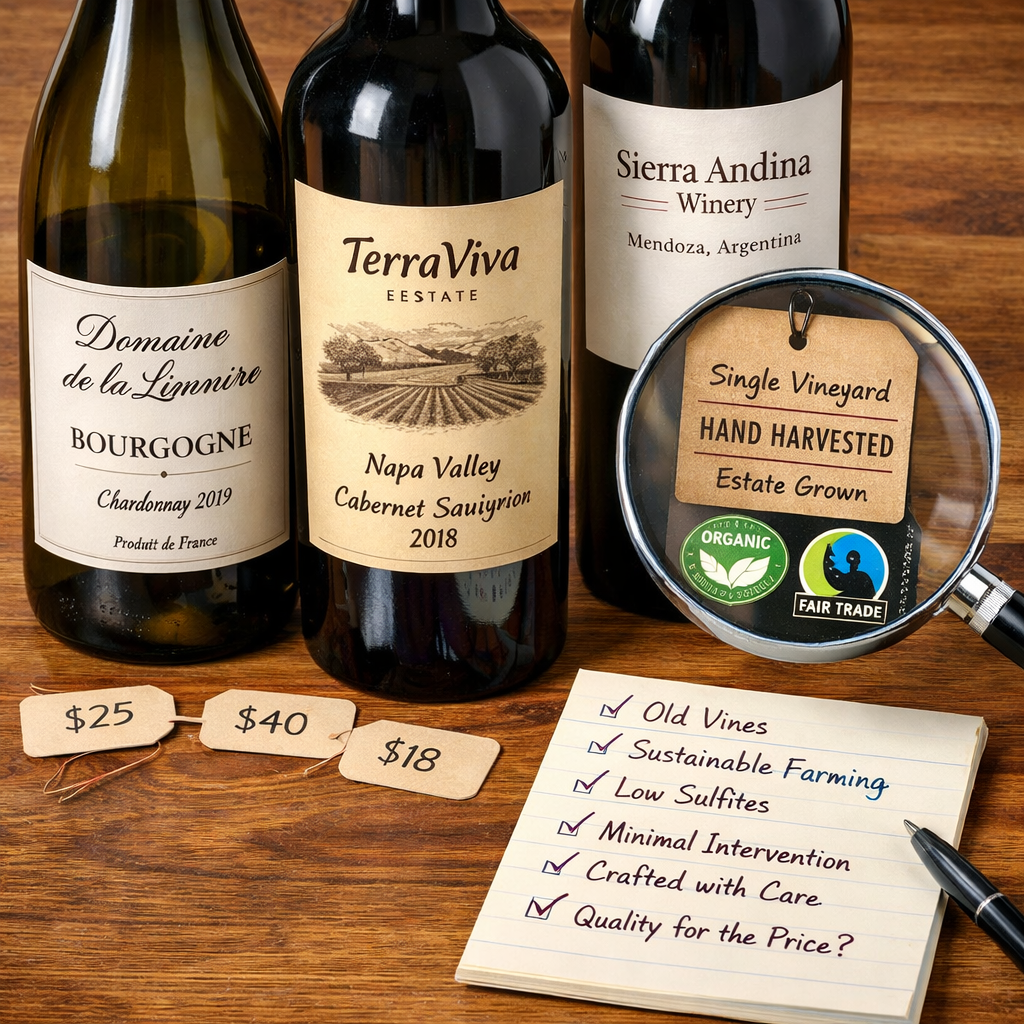
Compare Top Transparent-Sourcing Wine Brands: Practices, Proof, Value
Transparent wine brands make it easier to cook, pair, and buy with confidence. When you can see exactly where grapes come from, how they’re farmed, and who made the wine, you can predict flavor, structure, and value. Below, we compare leading transparent-sourcing brands—Bonterra, Frog’s Leap, Tablas Creek, Château Maris, Hiyu Wine Farm, and DTC platform Naked Wines—by practices, proof, and price, then map them to real dishes. We also show when DTC metrics beat retail shelf price, and when private-label value wins. If you’re shopping for recommended wine brands with open sourcing practices, start here—with My Paired Wine—for fast traceability checks, pairing fits, and smart DTC vs. retail trade-offs.
How we define transparent sourcing
“Transparency in wine means knowing where the bottle comes from, how it’s made, and who made it,” including vineyard sources, farming methods, and the winemaker’s hand, with examples across organic, biodynamic, and regenerative leaders in the U.S. and Europe (see Discovering the Best Transparently Sourced Wine Brands). oreateai.com At My Paired Wine, we use this working definition to shape pairing guidance and brand evaluations.
For DTC producers, transparency also means naming partner vineyards, disclosing farming practices, and tracing a grape’s journey with certifications and clear origin labeling across producer and product pages. Beyond the Bottle: What Transparent Sourcing Really Means for Top DTC Wine Brands
Key terms in brief:
- Organic: Grapes grown without synthetic herbicides or pesticides, relying on approved organic inputs and preventative vineyard hygiene. Organic wine aims to express site freshness and purity while avoiding residue concerns; certification audits confirm farming compliance vintage to vintage.
- Biodynamic: A whole-farm ecosystem approach using composts and plant/animal preparations, with vineyard work timed to lunar and cosmic calendars. The goal is energetic vineyard vitality and resilience; certification (e.g., Demeter) verifies inputs, practices, and record-keeping beyond organic.
- Regenerative: Practices that rebuild soil organic matter, biodiversity, and water cycling (e.g., cover crops, minimal till, livestock integration). Advocates, including Tablas Creek’s widely shared case studies, highlight improved soil health, vine resilience, and clearer terroir expression over time. oreateai.com
Criteria for comparison
Assess transparent wine brands on three axes:
- Farming & traceability: Certifications, vineyard maps, parcel names, and grower disclosure. Upsides include sharper terroir and eco outcomes; trade-offs can be higher costs and lower yields.
- Proof: Quality/service metrics, tech sheets, vintage notes, educational access (tours, classes), and consistent disclosures across releases.
- Price/value: Balance DTC wine value claims against retail private-label ranges. As context, major private labels often sit at entry pricing—Kirkland around $6–$24, Trader Joe’s Coastal near $4.99, and Reserve lines at roughly $12.99 and up. IBWSS private-label overview
Quick-evaluate checklist (online, on My Paired Wine, or in-store):
- Does the label or page name vineyards/AVAs and list certifications?
- Is there a tech sheet with vintage specifics and fermentation details?
- Are growers or parcels identified, not just regions?
- Is there third-party verification (organic/biodynamic/regenerative) you can confirm?
- Is the price aligned with your quality goal and channel norms (DTC vs. private label)?
These are the same filters we apply at My Paired Wine when curating recommendations.
Practices that signal real transparency
Look for these proof-positive signals:
- Vineyard maps, block/parcel notes, and grower profiles tied to each vintage.
- Farming disclosures (organic, biodynamic, regenerative) with certification bodies and audit dates where possible. Beyond the Bottle DTC transparency examples
- Visitor access—tours, classes, and vineyard walks—to experience practices firsthand.
Traceability means the ability to follow grapes from specific sites through farming and winemaking to the final bottle, enabling consumers to verify origin and process.
Pages and elements to screenshot or cite:
- A dedicated farming/sustainability page
- Certification logos with links to certifying bodies
- Vintage tech sheets with site and fermentation data
- “Meet the growers” profiles
- Parcel/lot identifiers on labels or product pages
Proof and verification methods
How to validate sourcing and quality:
- On producer sites, confirm certifications and origin labeling; for DTC, look for partner vineyard disclosures, grower stories, and vintage tech sheets. Beyond the Bottle DTC transparency examples
- Use platform metrics (availability, repeat-buy quality, service ratings) where published, and triangulate with online reviews to gauge consistency and trust. In wine e-commerce, “online reviews significantly influence trust, engagement, and purchase intent.” ScienceDirect: reviews and wine e‑commerce
- Keep context in mind: consumers process transparency in active, passive, or dormant modes, and it becomes most salient under higher risk or personal relevance—like gifting or trade-up purchases. ScienceDirect: how consumers process transparency
My Paired Wine highlights these disclosures in pairing notes when producers publish them.
Price and value across DTC and retail
DTC platforms can publish measurable KPIs and claim margin efficiencies that improve customer value; for example, one leading platform reports roughly 90% availability, 91% repeat-buy quality, and 91% of service interactions rated 5/5—useful signals when weighing value and consistency. Naked Wines Annual Report 2021 Private labels often win on shelf price but disclose less about precise sourcing; typical price bands include Kirkland $6–$24, Trader Joe’s Coastal around $4.99, and Reserve tiers from about $12.99. IBWSS private-label overview
Channel comparison at a glance:
- DTC: Higher traceability and education; value sharpened by metrics and direct feedback loops; strong for pairing confidence.
- Retail/private label: Lowest entry prices and easy availability; limited vineyard traceability; rely more on crowd reviews and retailer reputation.
Bonterra Organic Vineyards
Bonterra has championed organic viticulture since 1987, pairing legacy farming with consumer-facing storytelling. Discovering the Best Transparently Sourced Wine Brands Expect clear organic disclosures, certifications, and approachable styles that slot neatly into weeknight cooking. Pairings: Chardonnay with roast chicken or herby vegetables; Cabernet with burgers or flatiron steak. Value sits below many premium organics, making it a smart default for produce-forward meals.
Frog’s Leap Winery
Frog’s Leap combines certified-organic farming with an open-door visitor ethos—tours, tastings, and on-site education amplify transparency and trust. Discovering the Best Transparently Sourced Wine Brands Pairings: Napa Sauvignon Blanc with salads and goat cheese; balanced Cabernet with grilled steak or umami-rich mushroom dishes.
Tablas Creek Vineyard
Founded through a U.S.–France partnership (Robert Haas and Château de Beaucastel), Tablas Creek grows Rhône varietals organically and leads U.S. advocacy for regenerative agriculture—publishing methods and results that resonate with value-minded buyers focused on soil health and terroir clarity. Discovering the Best Transparently Sourced Wine Brands Pairings: Grenache/Syrah blends with lamb kofta or BBQ; Roussanne with roast chicken and garden herbs.
Château Maris
In the Languedoc, Château Maris is a biodynamic reference point, pairing low-intervention farming with distinct cellar choices like amphorae reminiscent of ancient Roman vessels. Discovering the Best Transparently Sourced Wine Brands Biodynamics integrates lunar calendars and on-farm composts to support vineyard vitality. Pairings: Syrah/Grenache with cassoulet, sausages, or ratatouille; earthy depth shines with stews.
Hiyu Wine Farm
Hiyu, in Hood River, Oregon, blends permaculture with innovative fermentations to create adventurous, texture-driven wines—ideal for culinary exploration. Discovering the Best Transparently Sourced Wine Brands Pairings: skin-contact whites with spice-led dishes like curry or tagines; light reds with charcuterie or roasted root vegetables.
Naked Wines
Naked Wines operationalizes transparency via DTC metrics and producer pages: around 90% availability, 91% repeat-buy quality, and 91% of service interactions rated 5/5 anchor consistency and value claims. Naked Wines Annual Report 2021 In the DTC model, brands sell directly online, reducing intermediaries and enabling clearer vineyard sourcing stories and faster feedback loops. For pairing, explore producer notes and customer ratings to filter by acidity, tannin, and flavor cues—often at prices below comparable retail benchmarks.
Side-by-side evaluation
| Brand | Farming method | Traceability assets | Visitor access | Channel | Value notes | Best pairing niches |
|---|---|---|---|---|---|---|
| Bonterra | Certified organic | Farming disclosures; certifications | Limited visits; strong online education | Retail/DTC | Priced below many premium organics | Weeknight chicken, veggie plates |
| Frog’s Leap | Organic | Vineyard storytelling; vintage notes | Tours/tastings reinforce practices | Retail | Classic Napa value via quality/education | Steak, mushrooms, goat cheese salads |
| Tablas Creek | Organic + regenerative | Vineyard/parcel detail; educational blogs | Tours/classes (availability varies) | Retail/DTC | Trade-up for regen leadership | Lamb kofta, BBQ, herb-roast chicken |
| Château Maris | Biodynamic | Biodynamic certifications; amphora notes | Visits (region dependent) | Retail | Old-world value vs. peers | Cassoulet, sausages, stews |
| Hiyu Wine Farm | Permaculture/experimental | Detailed fermentation stories | On-site farm experiences | DTC/limited retail | Niche, small-lot exploration value | Spiced dishes, charcuterie |
| Naked Wines | Mixed (by producer) | Producer pages; sourcing notes; metrics | N/A (platform) | DTC | KPIs: availability, repeat-buy, service [AR’21] | Broad styles; filter by dish needs |
Note: For retail context, private-label bands like Kirkland ($6–$24) and Trader Joe’s Coastal (~$4.99; Reserve ~$12.99+) set baseline shelf value for less traceable options (see IBWSS overview).
Which brand fits which buyer
- Weeknight value cook: Bonterra. Reliable organic freshness at accessible prices; great with roast chicken and veggie bowls.
- Napa learner/visitor: Frog’s Leap. Tours and classic styles teach terroir; pair with grilled steak and goat-cheese salads.
- Soil-health advocate: Tablas Creek. Regenerative leadership with Rhône clarity; match to lamb kofta and herb-roast chicken.
- Rustic Mediterranean fan: Château Maris. Biodynamic depth with southern French soul; serve with cassoulet and ratatouille.
- Culinary experimenter: Hiyu Wine Farm. Textural, permaculture-driven wines; pour with curry and charcuterie.
- Metric-minded value seeker: Naked Wines. KPI-backed consistency and discovery; use My Paired Wine pairing cues to align bottles to tacos al pastor and pasta nights.
Pairing guidance for home cooks
- Roast chicken: Tablas Creek Roussanne (herb-friendly weight) or Bonterra Chardonnay (balanced oak and citrus).
- Grilled steak: Frog’s Leap Cabernet (fine tannin, freshness) or Château Maris Syrah (peppery depth).
- Veg-forward bowls: Hiyu skin-contact white (texture for grains/greens) or Bonterra Sauvignon Blanc (zest and lift).
Cross-category note: For ceviche, a highland-style blanco tequila amplifies acidity and freshness—an agave benchmark when you’re mapping brightness for white-wine pairings. For more pairings, browse by dish on My Paired Wine.
Buying tips and channel strategies
- Start with your dish and target structure (acid, tannin, fruit)—the same levers My Paired Wine uses.
- Filter brands by farming disclosure and vineyard detail (certifications, vineyard names, tech sheets).
- Check proof: DTC KPIs or robust retailer reviews; prioritize platforms with strong rating density and recency. ScienceDirect: reviews and wine e‑commerce
- Compare price bands to your quality goal; private-label ranges around $6–$24 frame budget nights. IBWSS private-label overview
Reference point: Some research places luxury still wines above roughly $30–$40—use this threshold to decide when to trade up for terroir or cellar time. Luxury wine classification reference
Strategy: Mix channels—go DTC for traceability and metrics-driven value; lean on retail private labels for budget nights, validated by recent crowd reviews and your My Paired Wine pairing guidance.
Frequently asked questions
What counts as transparent sourcing versus marketing claims
Real transparency names vineyards or partners, explains farming methods, and shows origin on labels or pages. On My Paired Wine, we favor producers that provide this level of detail.
How to read certifications and vineyard details on a label
Scan for organic, biodynamic, or regenerative marks plus vineyard names and AVAs. Confirm on the producer site via farming pages, tech sheets, and maps—My Paired Wine links to these when available.
Are DTC subscriptions better value than retail bottles
DTC can deliver strong value when platforms publish quality and service metrics and pass along margin efficiencies. My Paired Wine helps you weigh those trade-offs against your pairing needs.
How sustainable farming impacts taste and price
Organic, biodynamic, and regenerative methods can heighten freshness and site expression but may reduce yields, nudging prices up. We call out these cues in pairing notes when they affect structure and fit.
Do natural or low-intervention wines pair differently with food
Often they show more texture and earthy nuance that flatters umami and gentle spice. On My Paired Wine, choose brighter, cleaner examples for delicate dishes and more textural bottles for richer plates.