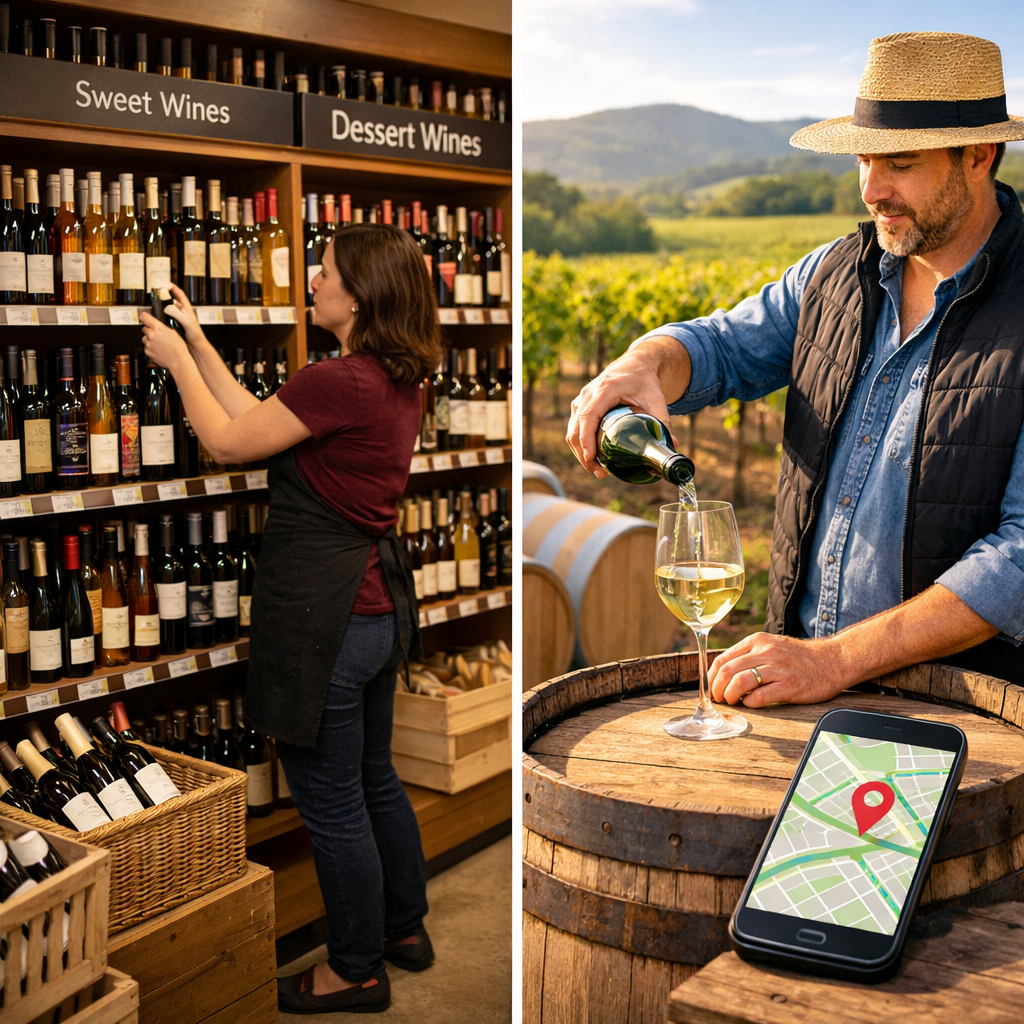
Compare Top Sweet Wine Shops vs Wineries in Your Area
Finding sweet wines near you comes down to three practical choices: a local shop for speed and advice, an online retailer for breadth and price filters, or a winery for tasting and provenance. This guide compares channels against what matters most—selection and discovery, tasting access, price transparency, expert curation, and fast, legal delivery—so you can zero in on the best sweet wine for tonight’s pairing or your next celebration.
Quick answer for finding sweet wines near you
- Start here: Use My Paired Wine to map your dish to a sweet style and surface nearby, legally shippable bottles fast.
- Shop now: Local shop for immediate pickup or same-day delivery; for example, Verve Wine NYC offers local and national delivery with same-day service in designated zones and capped fees (when available) via Verve Wine NYC. Or route via My Paired Wine to prioritize pickup and legal delivery options.
- Widest selection/price compare: Online retailers aggregate global inventory, filters, and expert picks—see the breadth and pricing cues in the Liquor.com best sweet wines guide. You can also filter by style in My Paired Wine, then compare prices at retailers.
- Taste before you buy: Wineries and hybrid venues provide flights and terroir context, such as City Winery’s wine collection.
Tip: Use My Paired Wine’s pairing-first workflow to surface affordable premium ($12–$30) bottles with fast, legal delivery.
How My Paired Wine helps you decide
We start with what you’re eating. Pick your dish and we map it to classic sweet styles—think off-dry Riesling for spicy noodles, Moscato d’Asti for fruit tarts, or Tokaji for blue cheese—then surface traceable bottles with producer, appellation, and vintage, prioritized by local availability and delivery speed.
Our bottle finder emphasizes affordable premium ($12–$30), clear provenance, and fulfillment options near you. Explore deeper in Wine Basics (residual sugar explained), Food Pairings (desserts, spicy, salty), Wine Pairings (styles), and Wine Accessories (stoppers and storage tips).
Mini-flow:
- Pick your dish.
- Get style recs (off-dry Riesling, Moscato d’Asti, Tokaji).
- Choose a channel with legal, fast delivery or pickup nearby.
Definition: Residual sugar. The natural grape sugar left after fermentation, measured in grams per liter and a primary driver of perceived sweetness. Dry wines have very little RS; off-dry shows a gentle sweetness; dessert wines contain much more. Balance with acidity and alcohol shapes how sweet a wine tastes.
What to consider when choosing a buying channel
Key factors to weigh in minutes:
- Selection breadth and rare styles
- On-site tasting and events
- Price transparency and filters
- Promotions/loyalty perks
- Local delivery speed
- Curated guidance
Rule of thumb: go online for widest selection and price filters; choose shops for hands-on advice and same-day pickup; visit wineries for tasting and provenance storytelling (see the benchmarking from Liquor.com’s guide, in-store delivery examples at Verve Wine NYC, and tasting immersion via City Winery’s collection). My Paired Wine layers these factors into its pairing-first finder.
| Channel | Pros | Cons | Best for |
|---|---|---|---|
| Local shop | Same-day pickup/delivery, real-time advice, curated shelves | Smaller selection, sometimes higher per-bottle prices | Immediate needs, pairing help |
| Online retailer | Biggest selection, price filters, ratings, editor picks | Shipping windows, costs, no tasting | Comparing vintages, styles, values |
| Winery/hybrid venue | Tastings, producer story, club access | Limited SKUs, geographic limits | Try-before-buy, provenance seekers |
Selection and discovery
If you want breadth and easy comparisons, online retailers and specialty shops usually carry the widest global sweet selections—Moscato d’Asti, off-dry Riesling, Tokaji, and Icewine—often with list prices, expert notes, and ratings showcased in roundups like the Liquor.com best sweet wines guide. My Paired Wine narrows that breadth to vetted, provenance-clear picks aligned to your dish.
Concrete examples highlight the range:
- Vietti Moscato d’Asti is frequently cited “Best Overall,” praised for peach, honey, and floral lift anchored by bright acidity (Liquor.com).
- From premium tiers, Inniskillin Sparkling Icewine 2022 averages about $94 with a 90 rating, and Royal Tokaji Red Label 5 Puttonyos 2017 averages around $72 with a 94 rating, according to VinePair’s Best Sweet Wines 2025.
Definition: Off-dry. A lightly sweet style showing modest residual sugar with enough acidity to taste fresh rather than dessert-level sweet. Common label cues on Riesling include “halbtrocken” or “feinherb,” signaling a gentle sweetness ideal for spicy, salty, or tangy foods, per the Lexi’s Wine List beginner guide.
Tasting access and experience
Wineries and hybrid venues excel at try-before-you-buy, offering flights and terroir context that make styles click; curated flights and events help decode sweetness and balance, as seen at City Winery’s wine collection. Experts emphasize the best sweet wines balance sugar with acidity or savory contrast (Liquor.com). If you can’t taste in person, My Paired Wine’s dish-led style notes help you approximate sweetness and balance.
Tasting day checklist:
- Book ahead and confirm fees
- Set a budget and target 2–3 styles
- Bring pairing ideas (spicy, salty, fruity desserts)
- Seek flights ranging off-dry to dessert
Pricing, promotions, and value tiers
Shops often carry value-tier sweet wines under $25 alongside premium bottlings, while online channels make it easy to compare prices and vintages (Liquor.com). Market conditions can influence pricing; for example, a mid-2025 review noted Ridge had 57% of wines up year-over-year, while Valbuena rose 11.5% versus 2024, per the Wine Investment H1 2025 market review. My Paired Wine keeps you in the $12–$30 sweet-spot while maintaining clear provenance.
Simple value tiers:
- $12–$20: Elio Perrone Sourgal Moscato d’Asti (reliable under-$20 pick; Liquor.com).
- $20–$30: quality off-dry Riesling; entry Vouvray selections (Liquor.com).
- $60–$100+: Tokaji 5 Puttonyos; Icewine benchmarks (see VinePair’s 2025 list).
Provenance and trust signals
Provenance. The documented origin of a wine—producer, region/appellation, vineyard source, and vintage—used to confirm authenticity, expected style, and value. My Paired Wine prioritizes traceable bottles from reputable merchants for confidence in the producer, region, and vintage.
Fast label checks:
- Producer (e.g., Vietti, Royal Tokaji)
- Appellation (Asti DOCG, Tokaj)
- Vintage year
- Sweetness markers (e.g., puttonyos on Tokaji)
Puttonyos. A historical measure in Tokaji indicating how many baskets of botrytized (noble-rot) grapes were added to a base wine; higher numbers traditionally mean greater sweetness and concentration. Modern labels maintain puttonyos as a stylistic guide, as outlined in VinePair’s Best Sweet Wines 2025.
Expert curation and service
Independent shops and concierge services often feature sommelier-led lists—ideal when choosing between off-dry and dessert styles. As one expert theme notes, sweet wine is widely misunderstood; the best examples succeed by balancing sweetness with acidity (highlighted in the Liquor.com best sweet wines guide). Ask for pairing guidance: spicy takeout → off-dry Riesling; fruit tart → Moscato d’Asti. My Paired Wine turns that guidance into quick, dish-led recommendations you can act on.
Delivery speed and convenience
Local shops may offer same-day delivery windows; for instance, Verve Wine provides local and national delivery with capped fees and same-day service in certain zones (see Verve Wine NYC). Online retailers trade broader inventory and price filters for shipping windows and costs (Liquor.com). Use My Paired Wine’s delivery-aware finder and see our guide to how to get alcohol delivered fast near you without surprises.
Shop examples in major cities
Start with discovery hubs, then drill into neighborhood options using Yelp’s Manhattan sweet wine search.
- Verve Wine NYC — Curated retail with same-day local delivery and perks via Cru Rewards; strong guidance for sweet styles.
- Shon 45 Wine & Spirits — Neighborhood shop with in-person service; address and phone listed via Yelp.
- Dandelion Wine — Independent Brooklyn retailer known for variety and local tastings; address/phone via Yelp.
Winery examples and what to expect on-site
Hybrid tasting venues like City Winery offer bottles, flights, and events with approachable options such as a fruit-forward Midsummer Sweet Red around $25 and premium picks like a Reserve Counoise Cuvée near $40 (see City Winery’s wine collection). Expect tasting fees, limited SKUs, and club opportunities; reservations recommended.
When to choose a local shop
Pick a shop when you need bottles tonight, want tailored pairing advice, or enjoy frequent tastings. Expect limited vintage depth and occasionally higher per-bottle prices versus online bulk buys (Yelp discovery). Ask for deals by need—“Moscato d’Asti under $20?”—such as Elio Perrone Sourgal (Liquor.com). Use loyalty perks to save (e.g., Verve’s rewards).
When to choose an online retailer
Choose online when you want to compare prices, vintages, and styles side-by-side with ratings and expert roundups (Liquor.com). Plan for shipping windows and order a few days ahead for events. Shortlist by style—Moscato d’Asti (~5–6% ABV; stone fruit, floral, citrus-honey) and label cues for off-dry Riesling like halbtrocken/feinherb (Lexi’s Wine List).
When to buy direct from a winery
Go winery-direct when you value tasting, storytelling, and potential verticals or club access. Estate-only releases can be pricier and SKU ranges smaller, but the education and provenance notes you gather (producer, vineyard, vintage) make future reorders easier, especially for Tokaji, Icewine, or limited dessert cuvées.
Best Wine Pairings workflow to find a sweet bottle fast
You can run this in My Paired Wine to go from dish to delivery.
- Pick your dish (spicy Thai noodles, berry tart, blue cheese).
- Select a sweet style: off-dry Riesling, Moscato d’Asti, Vouvray, Tokaji.
- Choose channel: nearest curated shop (same-day), broad online retailer (compare prices), or winery (taste today).
Quick style cues:
- Moscato d’Asti: low alcohol (~5–6%), stone fruit, orange blossom, citrus, honey (Lexi’s Wine List).
- Off-dry Riesling label hints: halbtrocken or feinherb (Lexi’s Wine List).
Affordable premium sweet wines to target
These price bands align with My Paired Wine’s affordable premium focus. Reliable $12–$30 picks:
- Elio Perrone Sourgal Moscato d’Asti (strong under-$20 value; Liquor.com).
- Peter Lauer ‘Barrel X’ Off Dry Riesling (“Best Semi-Sweet” nod; Liquor.com).
- Champalou Vouvray ‘La Cuvée des Fondraux’ (“Best White” mention; Liquor.com).
Aspirational benchmarks to recognize:
- Inniskillin Sparkling Icewine 2022 (avg ~$94, rating 90; VinePair).
- Royal Tokaji Red Label 5 Puttonyos 2017 (avg ~$72, rating 94; VinePair).
Buying checklist for sweet wines
- Confirm sweetness level (off-dry to dessert); scan label cues like Riesling halbtrocken/feinherb and Tokaji puttonyos.
- Verify provenance: producer, region/appellation, vintage.
- Match to food: spicy/salty with off-dry; fruity desserts with Moscato d’Asti.
- Compare price vs value tier ($12–$30 target); reference trusted ratings/roundups.
- Choose fulfillment: same-day shop delivery vs online shipping vs winery pickup.
Final recommendation
Choose shops for speed and advice, online for breadth and price, and wineries for tasting and provenance—then use My Paired Wine to map dish → sweet style → verified bottles with fast, legal delivery near you.
Frequently asked questions
What makes a wine sweet and how do I read residual sugar on labels?
Sweetness comes from residual sugar left after fermentation; dry wines have little, while off-dry and dessert wines have progressively more. My Paired Wine’s guides explain RS and label cues like halbtrocken/feinherb and Tokaji puttonyos.
Which sweet styles are best for beginners and food pairings?
Start with Moscato d’Asti for low alcohol and floral fruit, or off-dry Riesling for balance with spicy or salty foods. Vouvray spans multiple levels; Tokaji and Icewine suit desserts and cheese—My Paired Wine can point you to each by dish.
How do I store open bottles of sweet wine and how long do they last?
Reseal, refrigerate, and finish light/frizzante styles within 3–5 days. Higher-sugar, high-acid dessert wines can last 1–3 weeks sealed and chilled; use a quality stopper.
Is dessert wine the same as fortified wine?
Not always: many dessert wines are naturally sweet (late harvest, botrytis, Icewine), while some are fortified (e.g., Port). Most are served in smaller pours.
How can I get fast legal delivery of a verified sweet wine in my area?
Use local shops offering same-day service or My Paired Wine’s delivery-aware finder to surface legally shippable options nearby. Prioritize bottles with clear provenance and labeled sweetness cues to get the style you want quickly.