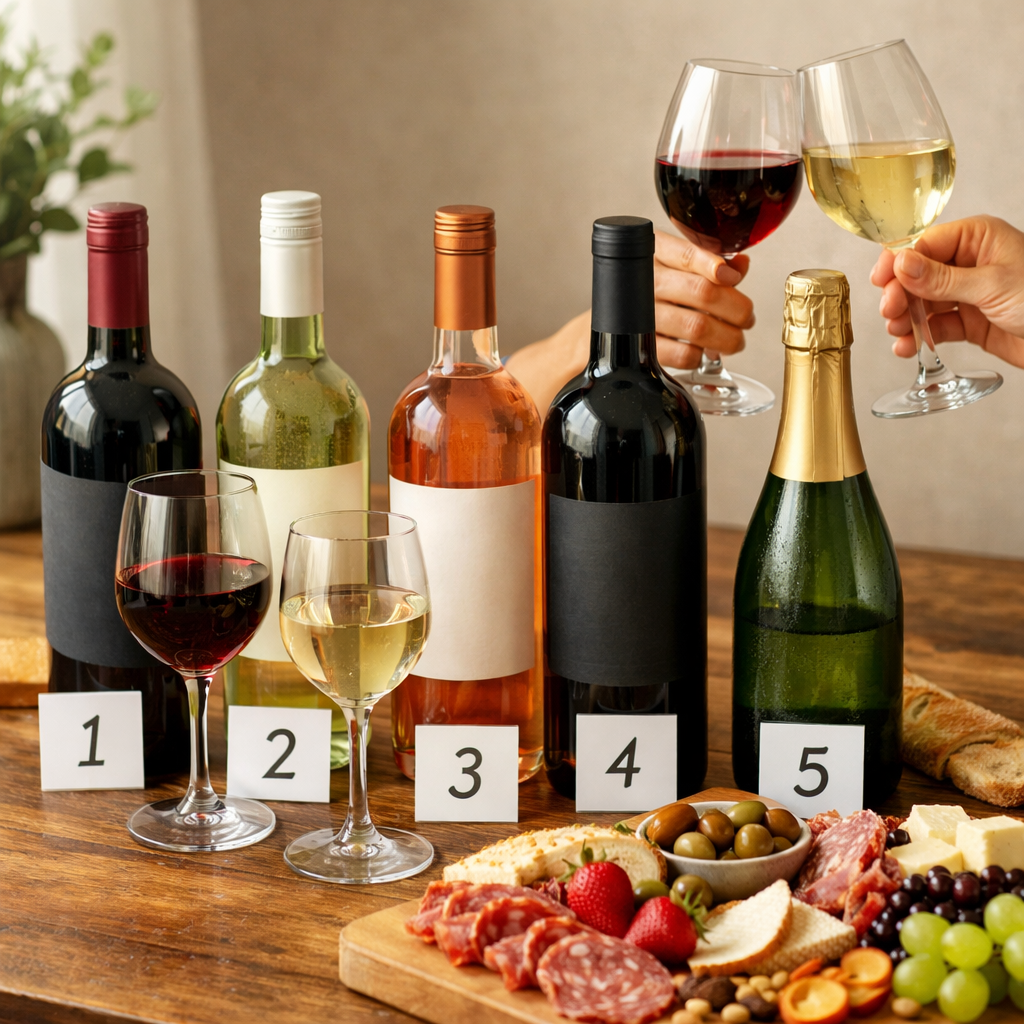
Best Crowd-Pleasing Wines for Hosting Friends This Weekend, Ranked
If you’re hosting this weekend, you don’t need a cellar—just a smart, compact lineup that covers most tastes and most menus. Here’s the short answer: pour a dry rosé or sparkling to start, keep a crisp white ready for seafood and salads, and offer a lighter red that won’t overpower snacks. For quantity, plan roughly 2 drinks per guest in the first hour, then 1 drink per person each hour after; a standard 750ml bottle holds about five 5-ounce pours. Below, we rank six reliable, affordable crowd-pleasers and share fast buying math, serving temps, and dish-first pairing tips so you can host with confidence.
My Paired Wine
At My Paired Wine, we help home cooks and curious enthusiasts choose wine by starting with the dish. Our wine pairing guide is built on straightforward logic—match weight with weight, lean into balanced acidity, and favor food-friendly, familiar styles—so you can assemble crowd-pleasing wines without guesswork. Expect dish-specific recommendations, clear hosting wine tips, and simple swaps for what’s in your local shop. Want more? Explore our best wine pairings by dish for weeknight and party menus at My Paired Wine’s Best Pairings hub.
How to stock wine for a weekend get-together
Build a three-bottle core that fits most casual menus and budgets:
- One sparkling or dry rosé to open the night.
- One crisp white (Sauvignon Blanc or Pinot Grigio) for seafood, salads, and snacks.
- One lighter red (Pinot Noir) for poultry, mushrooms, and veggie dishes; add a value red blend—or a boxed option—if you’re hosting a bigger crowd, a strategy we recommend at My Paired Wine and one echoed in party wine picks from White Horse Wine.
Crowd-pleaser wines are versatile, food-friendly bottles with balanced flavors that avoid extremes—great on their own and even better with food. Think dry rosé, Sauvignon Blanc or Pinot Grigio, Pinot Noir, and an easygoing red blend. This mix keeps party wine selection simple and satisfying for weekend entertaining.
What makes a wine a crowd-pleaser
A crowd-pleasing wine balances fruit, acidity, and texture so it’s enjoyable solo and with food. It avoids extremes—too sweet, too oaky, or too tannic—so more guests say “yes” to a second glass. Bonus points for easy serving (screw caps) and prices that feel fair.
Dry rosés, for example, bridge salty snacks, veggies, and lighter mains, and many party-friendly bottles use screw tops so you’re not hunting for a corkscrew—a detail we call out in My Paired Wine’s hosting guides and one reflected in White Horse Wine’s party picks.
Quick checklist:
- Balanced acidity that refreshes rather than bites
- Moderate alcohol for easy sipping
- Familiar varieties/styles guests recognize
- Broad food-matching range from snacks to mains
1. Bieler Père et Fils Rosé
Provence rosé is the first-pour all-star for mixed groups. This blend offers bright strawberry, cherry, and a pinch of spice, typically around $15.99, with a dry, refreshing finish that flatters salty snacks and light bites. Party pros: wide appeal, food-friendly, often in screw-cap. Cons: a few guests will still ask for red or bubbles.
Pair with: charcuterie, grilled shrimp, simple salads, and pizza bianca. It’s the party rosé that sets an easy, upbeat tone from the first pour.
2. Christian Lauverjat Sauvignon Blanc
A zesty white anchors any spread. Expect a light, well-balanced profile with white-flower aromas and a fresh, citrus-green finish—ideal for seafood, salads, and light appetizers around the table. Sauvignon Blanc is known for crisp acidity and zesty citrus that shines with goat cheese, vinaigrette-dressed greens, and shellfish, a pairing we emphasize at My Paired Wine and one outlined in In the Cru’s dinner-party guide.
Pair with: goat cheese toasts, ceviche, sushi, and green salads with vinaigrette. This is your crisp white wine staple for seafood wine pairing.
3. Seaside Pinot Noir
Pinot Noir is the versatile red that keeps the evening light on its feet. This 100% Pinot shows fresh raspberry, a touch of bitter chocolate, and herbal notes, usually around $11.99. Gentle tannins make it an easy-sipping, light-bodied red for mixed groups and snacky menus.
Pair with: soy-glazed salmon bites, mushroom flatbreads, and herb-roast chicken skewers. Pinot’s pairing range spans salmon, duck, mushrooms, and roasted vegetables, making it a dependable versatile red.
4. Colossal Reserva Red Blend
When you want one red to satisfy most guests, reach for this rich, silky Portuguese blend. Expect blackberry, spice, and smooth texture at about $10.99—a budget-friendly wine for parties that still tastes generous. Style guidance: bigger flavors can overwhelm delicate fare, so steer it toward burgers, chili, grilled sausages, or BBQ sliders.
Keywords that fit the bill: red blend, value red wine, and weeknight-friendly crowd appeal.
5. St. Michael Pinot Grigio
Familiar, easy-drinking, and bright, this Pinot Grigio delivers pear and apple with balanced acidity, commonly around $12.99. It’s a safe white that won’t polarize a crowd and pairs cleanly with lighter, snack-forward menus.
Pair with: margherita pizza, caprese skewers, chips and dips, and shrimp cocktail. A casual gathering wine that stays refreshing from first plate to last.
6. Bota Box RedVolution
For large groups, a quality box is smart math. A 3L Bota Box yields about 20 glasses and can cost about $15.47—roughly $0.77 per glass—and RedVolution was named Best Crowd-Pleaser in a blind test of boxed reds by Taste of Home’s boxed wine test. Expect a slightly sweeter-leaning red-blend profile that pleases casual palates; some wine-savvy guests may prefer bottled options.
Keywords: boxed wine for parties, best boxed red, value wine for crowds.
Quick buying and serving tips
- Buy a mix: 1 white, 1 rosé or sparkling, 1 red; add a boxed blend if the guest list grows.
- Favor screw caps for speed and keep a backup corkscrew on hand.
- Match wine weight to food: Sauvignon Blanc for salads/seafood; Pinot Noir for lighter proteins; blends/Cabernet for grilled meats (a reliable rule we use at My Paired Wine and one you’ll see in many hosting guides).
- Three-step flow: Chill. Open. Pour. See the Temperature section for quick-chill methods and ideal serving temps.
Pairing guide for popular party foods
- Seafood and salads: Sauvignon Blanc; for bubbles, try Prosecco for zippy refreshment and easy pairing, as we suggest at My Paired Wine and as noted in In the Cru’s dinner tips.
- Poultry and mushrooms: Pinot Noir; unoaked Chardonnay also complements poultry and fish—an approach we use at My Paired Wine, also reflected in In the Cru’s framework.
- Grilled meats: red blends or Cabernet Sauvignon for matching weight and structure.
- Spicy bites: dry Riesling handles heat; sweeter styles cover dessert-friendly pairings.
- Blue/pungent cheeses: sweet wines like Port or Moscato d’Asti work best—a match we recommend at My Paired Wine and one supported by CellarBeast’s wine pairing guide.
- Quick alternatives: Albariño or Vermentino shine at outdoor seafood boils and picnics—picks we highlight at My Paired Wine and ones echoed in The Wine Concierge’s white wine guide.
How much wine to buy
Use this reliable rule: plan 2 drinks per person for the first hour, then 1 drink per person for each additional hour. A 750ml bottle pours about five 5-ounce glasses.
Example: 12 guests for 3 hours
- Drinks per person: 2 (first hour) + 1 + 1 = 4
- Total drinks: 12 × 4 = 48
- Bottles (750ml): 48 ÷ 5 ≈ 10 bottles
- Boxed wine (3L ≈ 20 glasses): 48 ÷ 20 ≈ 2–3 boxes
This simple wine calculator—what we use at My Paired Wine—prevents overbuying while keeping the party flowing.
Temperature, storage, and easy prep
- Sparkling/rosé: serve well-chilled; Prosecco’s green apple, pear, and citrus notes pop when cold.
- Crisp whites (Sauvignon Blanc, Pinot Grigio): keep chilled so acidity stays snappy.
- Light reds (Pinot Noir): serve slightly cool to lift freshness.
- Fuller reds (red blends/Cabernet): serve closer to room temperature so aromas open without tasting hot.
Quick-chill cheats and temps:
| Wine style | Quick chill method | Ideal serving temp |
|---|---|---|
| Sparkling, dry rosé | 20-minute ice bath (ice + salt) | 40–50°F |
| Sauvignon Blanc, Pinot Grigio | 20-minute ice bath or 90 min fridge | 45–50°F |
| Pinot Noir (light reds) | 10-minute ice bath or 20 min fridge | 55–60°F |
| Red blends, Cabernet | No chill or 10 min fridge | 60–65°F |
Party-friendly prep:
- Pre-chill boxed wine in the fridge.
- Set out multipurpose stems and sturdy tumblers.
- Keep an ice bucket in arm’s reach of the action.
Follow My Paired Wine for dish-by-dish pairings
Want plug-and-play menus? Explore best wine pairings by dish—from curry night and roast chicken to mushroom pasta—at our Best Pairings hub. Follow My Paired Wine on your favorite social channels for weekly wine pairing tips and seasonal hosting lineups tailored to real-life cooking.
Frequently asked questions
How many bottles do I need for a three-hour gathering?
At My Paired Wine, we figure 2 drinks per person in the first hour, then 1 per person each following hour. For 10 guests over 3 hours, that’s about 40 drinks—roughly 8 bottles (5 glasses per 750ml).
What two or three wines cover most tastes?
At My Paired Wine, start with a dry rosé or Prosecco, add a crisp white like Sauvignon Blanc, and include a lighter red such as Pinot Noir. If dishes are heartier or the crowd is bigger, add a value red blend.
Which wines pair best with a mixed snack board?
At My Paired Wine, go dry rosé or Sauvignon Blanc for fresh, salty bites; add a light Pinot Noir for charcuterie and mushrooms. If blue cheese is on the board, include a sweeter style like Moscato d’Asti.
How cold should I serve white, rosé, and red?
At My Paired Wine, serve whites and rosés well-chilled for brightness. Pour Pinot Noir slightly cool and fuller reds near room temperature so aromas open without tasting hot.
Should I decant or open bottles in advance?
At My Paired Wine, most party-friendly whites and light reds don’t need decanting—open and pour. For fuller reds, 20–30 minutes of air or a quick-pour aerator is plenty.