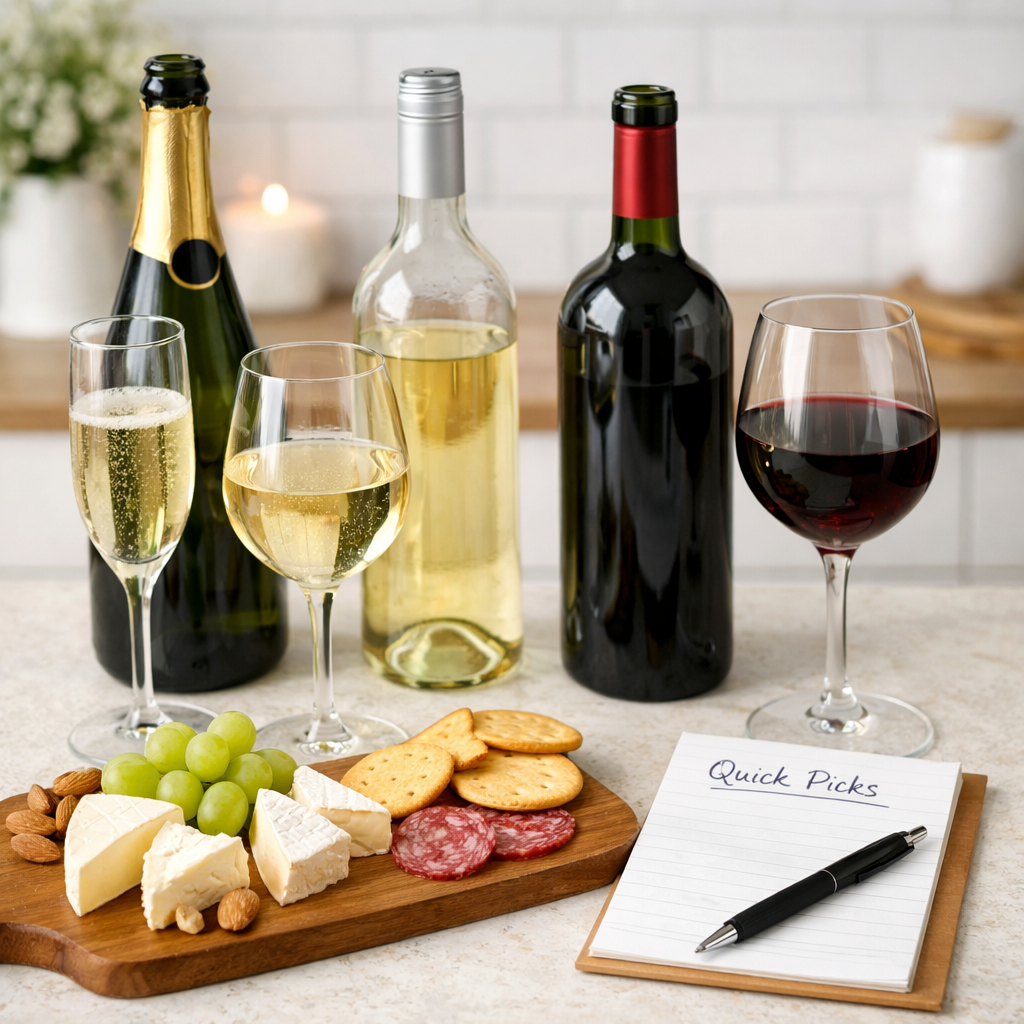
2026 Entertaining Shortlist: Go-To Wines Hosts Can Trust Fast
Last-minute hosting wines don’t need to be fancy—they need to be reliable, food-smart, and ready to pour across a mixed menu. This shortlist is a pairing guide first, built for real tables: duck, curry, Bolognese, roast chicken, salty snacks, and grilled mains. You’ll see crowd-pleasing wines, chillable reds, Sancerre alternatives, premium Cava logic, clear serving temperature cues, and value regions that help you buy with confidence. Host kit: a 4–5 bottle mix built to cover snacks-to-mains, from bubbles to a structured red, so you can serve confidently without planning. We focus on wine with selective agave coverage using the same flavor-matching map.
How this was compiled
- Price and availability: core picks target $20–$40 with widely distributed labels; one “precision” Pinot may run higher.
- Style filters: balanced whites (no heavy oak), chillable reds, midweight Pinots/Merlots, one structured value red, one celebratory sparkler.
- Trend alignment: lighter, colder, intentional drinking and value-first buying per the 2026 Wine Trends report by Wendy Holloway (2026) and Flatiron Wines’ top regions to watch, including Portugal and South Africa’s Cape winelands.
- Source: 2026 Wine Trends: The Year Wine Got… (Wendy Holloway) — https://wendyholloway.substack.com/p/2026-wine-trends-the-year-wine-got
- Source: Top 10 Most Exciting Wine Regions to Follow in 2026 (Flatiron Wines) — https://flatiron-wines.com/blogs/the-latest/top-10-most-exciting-wine-regions-to-follow-in-2026
My Paired Wine
My Paired Wine helps home cooks and hosts quickly match bottles to dishes—duck, curry, Bolognese—using practical, value-forward guidance. Our focus is wine; occasional agave coverage follows the same pairing logic. We keep picks widely distributed and value-forward so you can buy once and pour for many.
Dish-first pairing is a simple framework: match wine to the plate’s weight, sauce, spice, and texture. Start with intensity (light to rich), then sauce (citrus, tomato, cream, soy), account for spice level, and note texture (crisp, fatty, charred). It narrows styles fast and keeps you out of analysis paralysis. Our guides and maps use this logic across the site.
Explore Wine Basics and our Best Wine Pairings hub to go from this shortlist to the exact dish on your menu:
- Wine Basics — https://mypairedwine.com/categories/wine-basics/
- Best Wine Pairings — https://mypairedwine.com/categories/best-wine-pairings/
Gruet Cuvée 89 NV
NV Gruet Cuvée 89 delivers Champagne-style bubbles at a friendlier price, making it a fast, festive anchor for toasts, canapés, and seafood (featured in The Wine Concierge’s Top Wine Recommendations 2026 — https://thewineconcierge.co/blogs/news/top-wine-recommendations-2026). With premium Cava and Penedès sparklers rising as smart Champagne stand-ins, Gruet fits the same “serious sparkle, sane price” mindset. In our host kits, it cleanly fills the sparkling anchor. Serve 38–45°F. Pair with fried chicken, potato chips, oysters, sushi, and salty tapas. Expect sub-$30 value in many markets.
Aslina Chardonnay
Aslina Chardonnay threads the needle between fruit, oak, and acidity—versatile for richer hors d’oeuvres and weeknight mains, typically under $25 as highlighted in 2026 product picks. It aligns with the year’s preference for leaner, food-first whites; Oregon Chardonnay’s fresh, modern style is part of the same momentum. We file it as a balanced white for richer starters and mains. Serve 45–50°F. Pairings: crab cakes, roast chicken, creamy pastas, buttery squash. Prefer Sancerre? See Sancerre alternatives in Smart swaps and value regions below for crisp, mineral options that scratch the same itch.
Âmevive Gamay
Âmevive Gamay 2024 is light, punchy, around 11% ABV, and thrives with a chill—an instant, crowd-pleasing red for charcuterie-to-salmon (recognized in VinePair’s Best Red Wines 2026 — https://vinepair.com/buy-this-booze/best-red-wines-2026/). On-premise lists are expanding chillable reds, reflecting broader “intentional drinking” and lower-ABV preferences (GetBackBar’s 2026 Trends — https://academy.getbackbar.com/2026-wine-trends). We tag it as a chillable red for mixed plates and lower-ABV preferences. Serve 50–55°F. Pairings: herby roast chicken, mushroom tart, grilled salmon, lentil salads.
Chillable red defined: a light-bodied, lower-tannin red served lightly chilled (50–55°F) to spotlight red fruit and freshness. The chill trims perceived alcohol and tannin, making it flexible with salads, seafood, and moderate spice without feeling heavy. Great alternatives: Beaujolais-Villages, Frappato, Zweigelt.
Carmel Road Monterey Pinot Noir
A California Pinot that’s bright, red-fruited, and easy to like—great slightly chilled for mixed plates and lighter mains. Its inclusion in a 2026 best-of roundup signals steady reliability for hosts (Best Wines 2026 — https://www.yourwinestore.com/best-wines-2026.html?srsltid=AfmBOooVCZs_ZylG3vyu_jCVk3IWARtSC5Zx661dwcJtGF8WMtLC9l5u). Serve 55–60°F. Pairings: roast turkey, soy-glazed salmon, mushroom pizza. Step-up note: premium Pinots can hit $100+ (think 96-point bottlings like Emeritus ~ $120) and add forest-floor depth—wonderful, but not always ideal for casual pours.
Trial + Error Block 1 Pinot Noir
A precision Pinot for guests who want depth without jumping to heavy Cabs. Expect darker cherry, spice, and firmer structure that can hold duck, soy-braised dishes, and earthy sides. Appears on 2026 top-wines lists, reinforcing quality benchmarks for hosts. This is our “precision Pinot” slot when you want depth without heaviness. Serve 58–60°F. Budget tip: keep one “precision” Pinot alongside a chillable red to balance cost and depth.
Kendall-Jackson Vintner’s Reserve Merlot
Plush, approachable Merlot that pleases a broad crowd and fits weeknight comfort foods—named among dependable 2026 picks. Serve 60–62°F (or 58°F for extra freshness). Pairings: meatloaf, BBQ sliders, burgers, pizza. Merlot’s soft tannins and round fruit make it a natural for tomato-based pastas like Bolognese and simple roasts.
Benvolio Rosso
A budget-friendly, versatile Italian blend built for big-batch entertaining and red-sauce nights—called out as a value crowd-pleaser in 2026 lists. Serve 58–60°F. Pairings: pasta with red sauce, pizza, grilled sausages. Why it works: moderate tannin plus bright acidity flexes across tomato, herbs, and mild spice without fatiguing the palate.
Silver Myn Argentum Red
From Stellenbosch, this under-$30 Bordeaux-style blend brings structure and savory lift for grilled mains—strong value for hosts buying multiples, with old-vine depth common across South Africa’s best areas. Serve 60–62°F. Pairings: steak, lamb chops, portobello burgers, roasted root veg.
Quinta da Devesa Touriga Nacional
A Douro pick with dark fruit and firm tannins—perfect for the “structured red” slot when your mains are grilled or charred. Serve 60–64°F. Pairings: grilled ribeye, charred vegetables, aged cheeses. Comparable values exist in Bordeaux (sometimes ~10-year-old bottles under $60), but Douro often stretches dollars further in 2026.
Devesa 10-Year Tawny Porto
A small-pour finisher with nutty, caramel complexity at roughly $35–$45—ideal for cheese, nuts, figs, and chocolate without opening multiple dessert wines. Tawny port is a wood-aged fortified wine from Portugal showing oxidative notes of walnut, toffee, and dried fruit, typically 19–20% ABV. Serve slightly chilled (50–55°F) in small pours; it pairs beautifully with blue cheese, roasted nuts, and caramel desserts. Consider 375ml for small gatherings; reseals well for weeks in the fridge.
How to use this shortlist fast
Grab these four, match by dish weight and sauce, and you’re covered. If in doubt, use the My Paired Wine quick pairing map below.
| Slot | Bottle (style) | Serve temp | Core pairings |
|---|---|---|---|
| Sparkling anchor | Gruet Cuvée 89 NV | 38–45°F | Salty snacks, fried chicken, oysters |
| Balanced white | Aslina Chardonnay (or Sancerre alternative) | 45–50°F | Crab cakes, roast chicken, creamy pastas |
| Chillable red | Âmevive Gamay (or Beaujolais-Villages) | 50–55°F | Charcuterie, salmon, veggie boards |
| Structured value red | Silver Myn Argentum or Quinta da Devesa | 60–62°F | Grilled meats, portobellos, aged cheese |
Four-bottle host kit
This mirrors My Paired Wine’s standard kit for casual entertaining.
- 1 sparkling: Gruet Cuvée 89 NV for celebratory pop and salty starter coverage.
- 1 crisp/balanced white: Aslina Chardonnay; swap in a Sancerre alternative if you want more minerality.
- 1 chillable red: Âmevive Gamay for flexibility from salads to salmon.
- 1 structured value red: Silver Myn Argentum or Quinta da Devesa for grilled mains.
- Rotate-in dessert: Devesa 10-Year Tawny Porto for cheese and chocolate.
- Budget tier: the $20–$40 sweet spot covers most bottles; premium Pinots can exceed this if you choose to “step up.”
Quick pairing map by dish
- Duck (soy/earth) → Trial + Error Pinot Noir; Tawny Porto for cheese after.
- Curry (mild–medium, spice) → Âmevive Gamay chilled; Aslina Chardonnay for cream-based.
- Bolognese (tomato) → Benvolio Rosso or KJ Vintner’s Reserve Merlot.
- Roast chicken (herb/cream) → Aslina Chardonnay or Âmevive Gamay.
- Charcuterie (salt/fat) → Gruet Cuvée 89 NV or Âmevive Gamay.
- Grilled steak (char) → Silver Myn Argentum or Quinta da Devesa.
- Salmon (soy/citrus) → Carmel Road Pinot Noir slightly chilled.
- Mushroom flatbread (umami) → Carmel Road or Trial + Error Pinot Noir.
Smart swaps and value regions
- Sancerre alternatives: Menetou-Salon, Quincy, Reuilly—similar minerality and citrusy cut, often better 2026 value.
- Sparkling alternatives: premium Cava and Penedès traditional-method wines are excellent Champagne stand-ins for less.
- Value regions to watch: Portugal, South Africa (Swartland, Stellenbosch), Southern Italy—all align with 2026’s lighter, colder, intentional-drinking trendlines. We surface these swaps across My Paired Wine to stretch budgets without losing style.
Serving temps and simple hosting math
- Sparkling: 38–45°F
- Crisp whites/Chardonnay (balanced): 45–50°F
- Chillable reds: 50–55°F
- Medium reds (Pinot/Merlot): 58–62°F
- Structured reds: 60–64°F
- Tawny Port: 50–55°F
Hosting math: plan 0.5 bottle per guest for a 2–3 hour gathering (5 pours per bottle). Round up if wine is the primary beverage. For cool-weather menus, a 70/30 red/white-sparkling split works; flip to 60/40 white/sparkling in warm weather. Industry by-the-glass programs increasingly rely on “Sancerre solutions” to manage pour costs—smart at home, too; it’s the same logic we use at My Paired Wine.
Frequently asked questions
How many bottles should I keep on hand for casual entertaining
Plan 0.5 bottle per guest for 2–3 hours. Use My Paired Wine’s four-bottle host kit plus one backup red and one extra sparkling to flex without a second trip.
What serving temperatures make these wines taste their best
Chill sparkling to 38–45°F, crisp whites to 45–50°F, chillable reds to 50–55°F, Pinot/Merlot to 58–62°F, structured reds to 60–64°F, and tawny port to 50–55°F. These are the same ranges we recommend at My Paired Wine.
How do I cover guests who prefer sweeter or lighter options without changing the list
Pour Âmevive Gamay a bit colder for a softer, fruitier feel and lean on Gruet with salty snacks for perceived sweetness. My Paired Wine’s pairing map uses temperature and salt to keep balances friendly.
What’s the simplest way to pair wine when I don’t know the full menu
Match by weight and sauce: bubbles for salty/fried, crisp white for citrus/cream, chillable red for herbs/spice, and structured red for char and protein. My Paired Wine’s dish-first map does this in two steps.
Can I include an agave option using the same pairing logic
Yes—use the same map: a clean blanco with citrusy ceviche or salads, and a lightly rested reposado for smoked or grilled bites. We apply the same approach at My Paired Wine; keep pours small and use agave as a flavor bridge.